
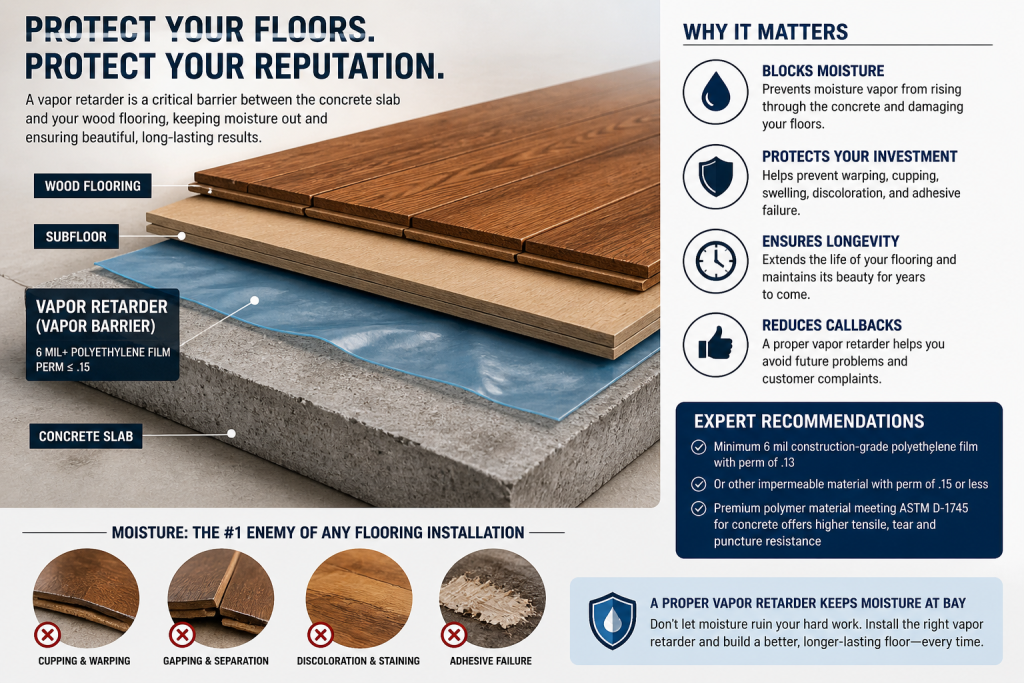
 Nestled between a concrete floor and a wood floor is a vapor barrier or vapor retarder. This is material that is used for damp proofing, which keeps moisture away from the vulnerable wood planks above. They are installed over the subflooring and are a key part in ensuring that the wood floor looks beautiful and lasts for a long time.
When selecting a vapor retarder, there are some important considerations. Most experts recommend a minimum 6 mil construction-grade polyethylene film, with a perm of .13, or other impermeable material with a perm of .15 or less. A premium polymer material meeting ASTM D-1745 for concrete with higher tensile, tear, and puncture resistance is highly desirable.
Without the appropriate moisture barrier, flooring material can absorb too much moisture. Moisture is the worst enemy of any flooring material. It can cause discoloration and staining and can even affect any adhesive that may be holding the flooring in place. When flooring material absorbs moisture, it can cause expansion in each piece so that they no longer fit together or the edges become curled, cupped, or otherwise separated. Flooring contractors should worry the most about moisture when it comes to its long-term effect on the job.
Choosing the right vapor retarder helps the installation go smoothly and keeps the customer satisfied with the results. There is no other condition that can have as much affect on flooring as moisture can. It doesn’t matter whether the flooring is tile, laminate, hardwood, vinyl, or something else–moisture is the one thing that can wreak havoc on a flooring job. A proper vapor retarder keeps moisture at bay. It also helps flooring contractors avoid future complaints caused by excess moisture absorbing into the wood flooring.
[…] depending on specifications. Because laminate is made of wood particles, they expand or contracts due to moisture in the air and at the site. If installers install the laminate while the pieces have expanded, the […]