
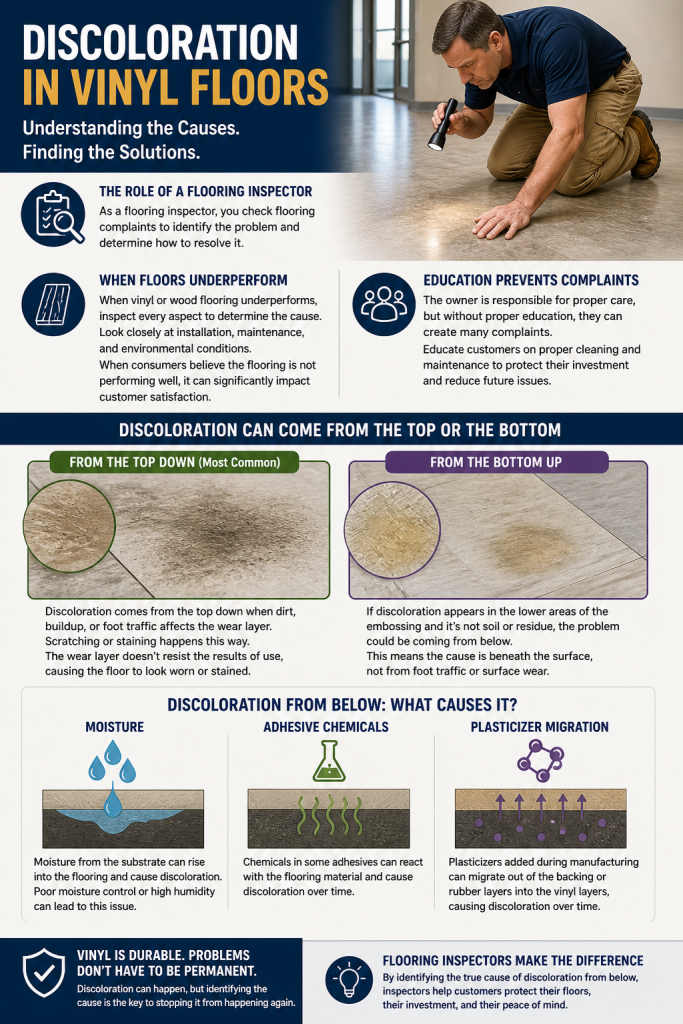
 When working with vinyl floors, it’s not unheard of to have to deal with discoloration. Ideally, this kind of hard surface floor will last for many years without any kind of problem. Sometimes discoloration pops up, and it’s up to a flooring contractor or inspector to figure out what’s going on with the vinyl. While it may seem like a mystery, the cause is usually limited to just a couple of conditions.
More About Discoloration in Vinyl Floors
Most of the time, discoloration comes from the top down, meaning that the buildup or soil from foot traffic is affecting the wear layer of the vinyl and not resisting the results of use. Often, scratching or staining can occur this way. It’s the most common way that vinyl floors become discolored or otherwise stained, making it look less than ideal for businesses and residents.
However, if flooring inspectors can see discoloring in the lower areas of the embossing and it does not look like soil or a residue buildup, the problem could be from the bottom up. It is possible for this odd coloring to come from underneath instead of from the top. But how can this happen when no foot traffic is affecting the bottom layers of the flooring material?
Discoloration From Below
When discoloring comes up from the substrate, it is generally caused by moisture or chemicals from the adhesive. A condition called plasticizer migration can also cause it. This occurs when manufacturers add plasticizers to rubber materials or layers during the manufacturing process. Over a period of time, the plasticizers can migrate out of the rubber into the other vinyl layers.

[…] of the unique issues that vinyl flooring may encounter is plasticizer migration from rubber-backed mats. People often see this as a yellowish permanent stain on vinyl flooring when a rubber mat sits in […]