
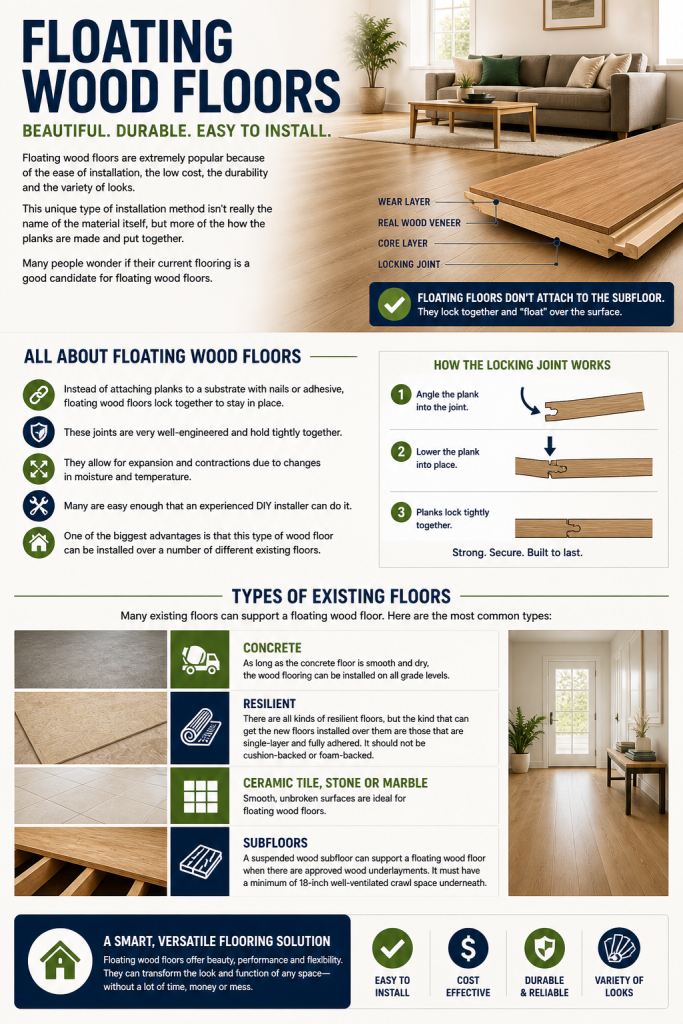
 Floating wood floors are extremely popular because of the ease of installation, the low cost, the durability, and the variety of looks. This unique installation method doesn’t name the material itself; it describes how the planks are made and assembled. Many people wonder if their current flooring is a good candidate for floating wood floors.
All About Floating Wood Floors
Manufacturers design floating wood floors so the planks lock together instead of attaching to a substrate with nails or adhesive. These well-engineered joints hold tightly together. They can be installed on any grade. They allow for expansion and contraction due to changes in moisture and temperature. Many of these specialty floors are easy enough that an experienced DIY installer can do them. One of the biggest advantages is that you can install this type of wood floor over several different existing floors.
Types of Existing Floors
The good news is that there are a number of existing floors that welcome the addition of a floating wood floor. Here is a short list of existing floors you can install floating floors over:
- Concrete—As long as the concrete floor is smooth and dry, the wood flooring can be installed on all grade levels.
- Resilient— Many types of resilient floors exist, but you can install new flooring only over single-layer, fully adhered ones. Do not install over cushion-backed or foam-backed floors.
- Ceramic tile, stone, or marble—Smooth, unbroken surfaces are ideal for floating wood floors.
- Subfloors— A suspended wood subfloor supports a floating wood floor when it includes approved wood underlayments. It must have a minimum of an 18-inch well-ventilated crawl space underneath.
As some of the most versatile new flooring out there, this unique type of wood floor can really change the look and function of a home or office without a lot of money for preparation and installation.
Leave a Reply