
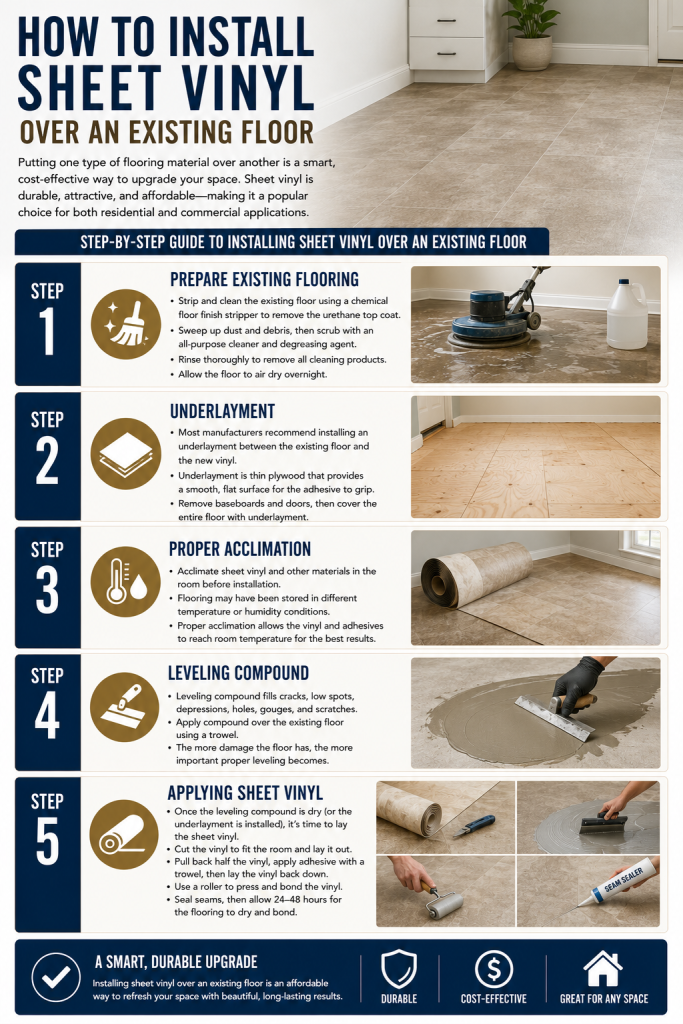
 Putting one type of flooring material over another is pretty common, because most flooring can handle it when prepared properly, and it is much less expensive to just go over the top rather than spend time and money tearing up old flooring. Putting vinyl over an existing floor is one of the more popular options. Sheet vinyl is durable, attractive, and relatively inexpensive. When existing flooring in the office space or residential space is in need of an upgrade, putting sheet vinyl over the top of an existing floor is a good decision.
There are several steps involved in putting down sheet vinyl over an existing floor.
Step 1. Prepare Existing Flooring
Strip and clean the existing floor. The adhesive used to lay the vinyl down needs a clean, smooth surface to stick to. Use a chemical floor finish stripper to get the urethane top coat off. Sweep up dust and debris, followed by a good scrubbing with an all-purpose cleaner. Most experts also recommend using a degreasing agent as well. Rinse the floor thoroughly to get all the cleaning products up. The existing floor surface should be allowed to air dry overnight.
Step 2. Underlayment
Most of the time, the manufacturer of the sheet vinyl will recommend that an underlayment be placed between the existing floor and the new flooring. Underlayment is thin plywood that provides a nice, flat surface for the sheet vinyl adhesive to grip. To put down underlayment, the installer needs to take off the baseboards and doors and cover the whole floor with it.
Step 3. Proper Acclimation
Sheet vinyl flooring material can behave differently depending on ambient temperatures and humidity. That’s why it’s important to acclimate the new flooring and other materials in the space prior to installing. Warehouses may store sheet vinyl in cooler, warmer, or more humid conditions than the installation site. Proper acclimation allows the vinyl and the adhesives to get to room temperature for optimal installation.
Step 4. Leveling Compound
Step 5. Applying Sheet Vinyl
When the leveling compound is completely dry, or the underlayment is installed, it’s time to apply the sheet vinyl. After cutting the pieces of sheet vinyl to fit the room, lay out the pieces. Then, pull half of the vinyl back and put a thin layer of adhesive down using a trowel. Carefully lay the vinyl back down and use a roller to press the vinyl and the adhesive together to bond better. Use seam sealer at the vinyl seams, then allow the flooring to dry and bond for 24-48 hours.

[…] happens when the flooring material, like vinyl or resilient, takes on the shape or texture of the substrate. If there are any imperfections there, they will […]