
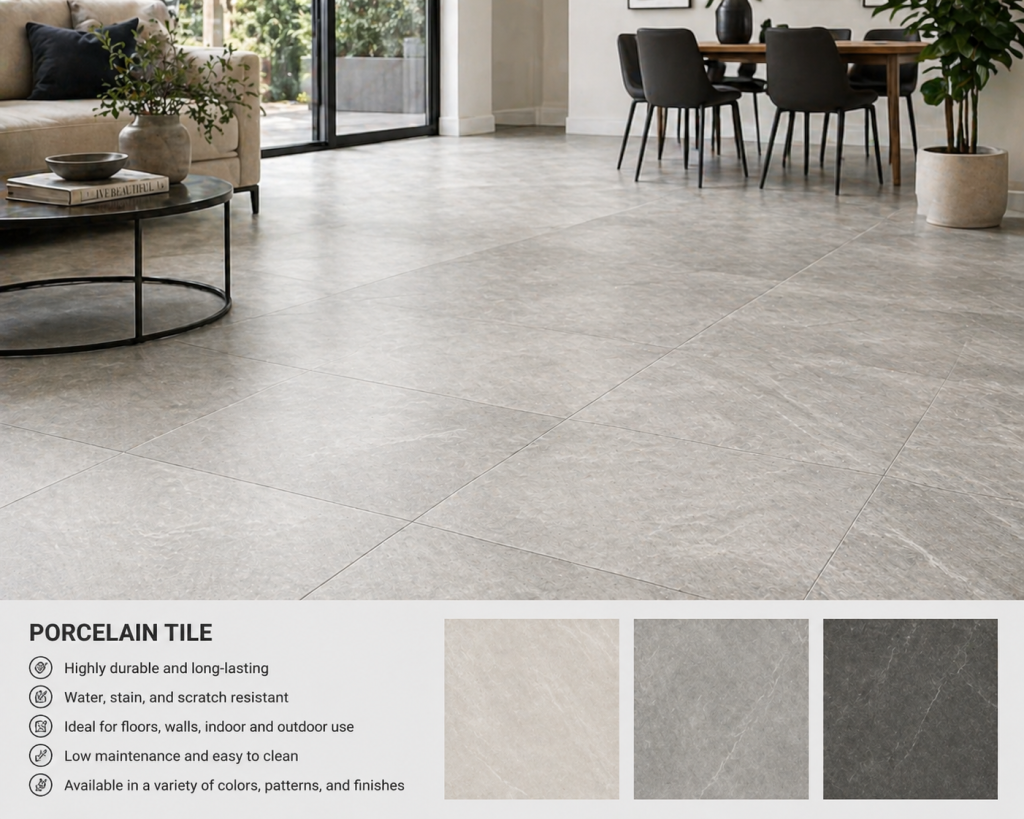
People use porcelain tile for floors, walls, countertops, and more. It offers a beautiful and stylish way to enhance residential and commercial spaces. Porcelain tiles work well in many situations. They create a long-lasting surface covering. They resist moisture, wear and tear, and even temperature extremes.
Many people might think that all tile is the same, but there is a difference between ceramic tiles and porcelain tiles. Depending on the installation location, one option may offer an advantage over the other. Learning more about porcelain tile can help those in the business help clients decide whether or not they are a good choice for the project. Porcelain tiles have several unique characteristics that flooring installers and inspectors should know.
Here is a list of 10 characteristics of porcelain tiles
- Porcelain tiles and ceramic tiles are made from different types of clay.
- Porcelain tiles are more expensive than ceramic tiles.
- They are harder than standard ceramic tiles because they are denser.
- Porcelain tiles have a water absorption rate of less than .5 percent, because of their density, making them ideal for areas with high moisture.
- Due to density, porcelain tiles are heavier than ceramic tiles and are more difficult to cut and install.
- Installers need a special cement adhesive for porcelain tiles that can support their weight, because standard ceramic tile adhesive isn’t strong enough.
- In the industry, porcelain tiles are rated by hardness on a zero-to-five scale.
- Temperature extremes are no problem for porcelain tile, and they can also withstand exposure to snow, rain, and sleet.
- Porcelain provides a fine surface for glazing, which expands design and décor possibilities. Manufacturers can also leave it unglazed.
- Because of its strength and scuff resistance, porcelain tile is better than ceramic tile for high-traffic areas.
If porcelain tile is the right choice for a job, it will add a lot to the work or living space. Many clients prefer this kind of tile over other types of wall or floor coverings.
Leave a Reply