Flooristics, LLC

Article Search

Family Owned, Locally Operated
  • Home
  • Blog
    • Videos
    • Podcasts
    • Carpet and Rugs
    • Expert Witness
    • Floor Safety
    • Flooring Help
    • Hardwood and Laminate
    • Podcasts
    • Resilient
    • Tile and Stone
    • Tools
  • About
  • Contact
  • Floor Inspections
  • Expert Witness Services
  • Walkway Audits
    • Walkway Audit Process
    • OSHA “Qualified Person”

What are the Steps in Rotogravure Manufacturing?

July 12, 2017 by Flooristics staff Leave a Comment

Share Button

rotogravure

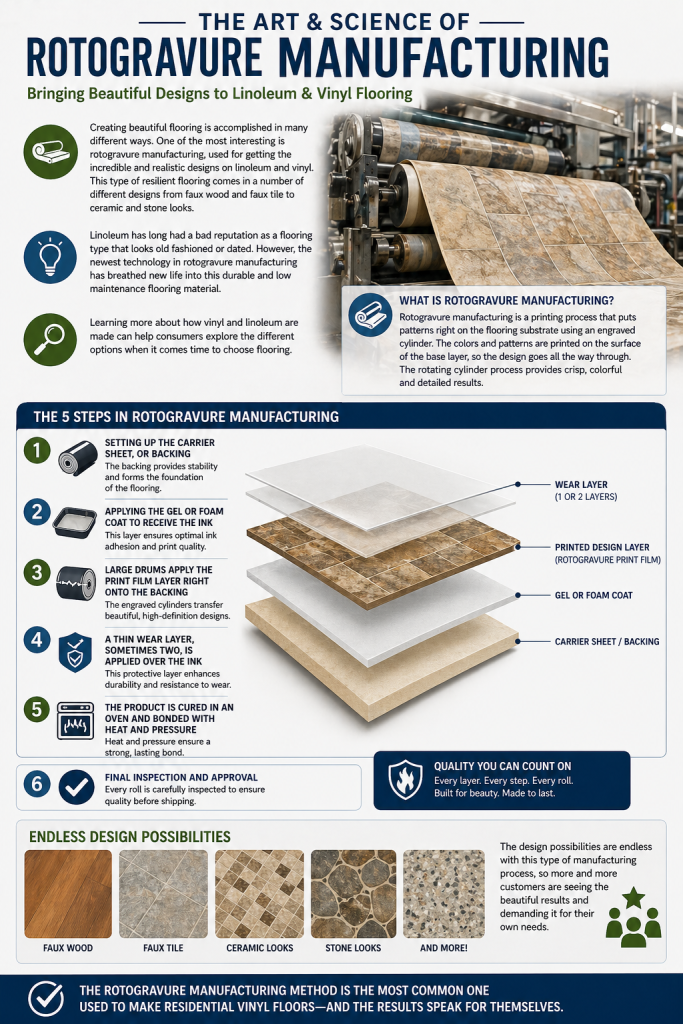
Creating beautiful flooring is accomplished in many different ways. One of the most interesting is rotogravure manufacturing, used for getting the incredible and realistic designs on linoleum and vinyl. This type of resilient flooring comes in a number of different designs from faux wood and faux tile to ceramic and stone looks.

Linoleum has long had a bad reputation as a flooring type that looks old fashioned or dated. However, the newest technology in rotogravure manufacturing has breathed new life into this durable and low maintenance flooring material. Learning more about how vinyl and linoleum are made can help consumers explore the different options when it comes time to choose flooring.

Rotogravure manufacturing is a printing process that puts patterns right on the flooring substrate using an engraved cylinder. The colors and patterns are printed on the surface of the base layer, so the design goes all the way through. The rotating cylinder process provides crisp, colorful and detailed results.

The five steps in rotogravure manufacturing are:

  1. Setting up the carrier sheet, or backing
  2. Applying the gel or foam coat to receive the ink
  3. Large drums apply the print film layer right onto the backing
  4. A thin wear layer, sometimes two, is applied over the ink
  5. The product is cured in an oven and bonded with heat and pressure
  6. Final inspection and approval to ensure quality before shipping

The design possibilities are endless with this type of manufacturing process, so more and more customers are seeing the beautiful results and demanding it for their own needs. The rotogravure manufacturing method is the most common one used to make residential vinyl floors and the results speak for themselves.
 

Filed Under: Resilient Tagged With: printing vinyl flooring, rotogravure, rotogravure manufacturing, rotogravure printing, vinyl floor printing, vinyl rotogravure

Leave a Reply Cancel reply

Your email address will not be published. Required fields are marked *

Call Today! 1.801.574.0387

  • Email
  • Facebook
  • Pinterest
  • RSS
  • Twitter
  • YouTube

Recent Posts

How Does an Inspector Check for Fuzzing?

Carpet fuzzing presents a serious problem. When someone calls a flooring inspector to evaluate a … [Read More...]

Delaware Flooring Defects Expert Witness Brings Facts to the Case

When a business owner suspects a flooring defect has caused problems at the workplace, it may be a … [Read More...]

Recent Comments

  • Does Heat Set Carpet Last Longer? - Flooristics, LLC on Making Different Sized Carpet Fibers
  • Are Anti-Static Treatments Applied to All Carpets? - Flooristics, LLC on How to Re-Stretch a Carpet
  • Preparing Concrete for Glue Down Carpet - Flooristics, LLC on How to Perform a Calcium Chloride Test

Contact Us

Flooristics, LLC
P.O. Box 91171
Salt Lake City, UT 84109
801.574.0387

View our Financial Disclosure. and Privacy Policy.
© 2014 Flooristics, LLC. All rights reserved.