Flooristics, LLC

Article Search

Family Owned, Locally Operated
  • Home
  • Blog
    • Videos
    • Podcasts
    • Carpet and Rugs
    • Expert Witness
    • Floor Safety
    • Flooring Help
    • Hardwood and Laminate
    • Podcasts
    • Resilient
    • Tile and Stone
    • Tools
  • About
  • Contact
  • Floor Inspections
  • Expert Witness Services
  • Walkway Audits
    • Walkway Audit Process
    • OSHA “Qualified Person”

What is a Lack of Core Bond?

February 5, 2017 by Flooristics staff 1 Comment

Share Button

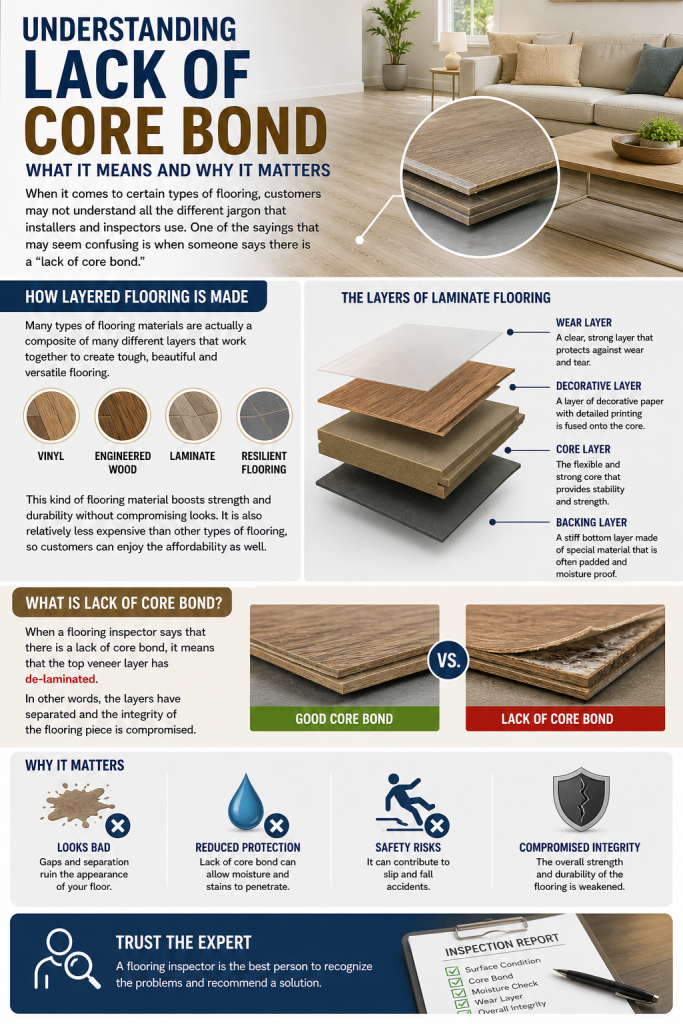
Customers may not understand all the jargon that installers and inspectors use. This is especially true with certain types of flooring. One of the sayings that may seem confusing is when someone says there is a “lack of core bond.” Customers must understand how manufacturers produce certain types of flooring before they can understand what that phrase refers to.

Many types of flooring materials are actually a composite of many different layers that work together to create tough, beautiful, and versatile flooring. Vinyl, engineered wood, laminate, and resilient flooring are examples of layered flooring materials. These materials increase strength and durability. They do this without compromising appearance.

Layered Flooring

Layered flooring materials also cost less than many other types of flooring. This makes them a more affordable option for customers.

For example, laminate flooring generally consists of a stiff bottom layer made of a special material that often includes padding and resists moisture. The next layer is the flexible and strong core. Then, the layer of decorative paper with very detailed printing is fused onto the piece. Finally, the wear layer is a clear, strong material that protects the piece from wear and tear. Normally, these layers stay together tightly and function like one single piece of material; the bonds are that tight. Occasionally, manufacturing errors create problems within those layers.

When a flooring inspector says that there is a lack of core bond, it means that the top veneer layer has delaminated. In other words, the layers have separated, and the integrity of the flooring piece is compromised. Besides looking bad, the lack of a core bond can lead to problems with repelling stains and moisture and can even contribute to slip and fall accidents. A flooring inspector is the best person to recognize the problems and recommend a solution.

Filed Under: Floor Safety, Flooring Help, Hardwood and Laminate, Resilient Tagged With: core bond, delamination, floor layers, flooring problems, wear layer

Trackbacks

  1. Direct Pressure Laminate vs High Pressure Laminate - Flooristics, LLC says:
    April 27, 2026 at 10:22 am

    […] more affordable options for floor coverings, and it provides a strong, scuff-resistant surface for high-traffic areas. As with most manufactured flooring, there are several types clients can choose from. One of the […]

    Reply

Leave a Reply Cancel reply

Your email address will not be published. Required fields are marked *

Call Today! 1.801.574.0387

  • Email
  • Facebook
  • Pinterest
  • RSS
  • Twitter
  • YouTube

Recent Posts

Is it Safe to Clean Linoleum With Bleach?

Is it safe to clean linoleum with bleach? Many homeowners and business owners wonder about that. … [Read More...]

All About North Carolina Flooring Defects Expert Witnesses

Flooring defects can significantly alter the look and performance of the flooring at the workplace. … [Read More...]

Recent Comments

  • Common Flooring Mistakes By Maintenance Workers - Flooristics, LLC on Certified Floor Inspections
  • How Can Moisture Problems in Concrete be Corrected? - Flooristics, LLC on Certified Floor Inspections
  • What Causes Crowning and Cupping in Wood Floors? - Flooristics, LLC on Certified Floor Inspections

Contact Us

Flooristics, LLC
P.O. Box 91171
Salt Lake City, UT 84109
801.574.0387

View our Financial Disclosure. and Privacy Policy.
© 2014 Flooristics, LLC. All rights reserved.