Flooristics, LLC

Article Search

Family Owned, Locally Operated
  • Home
  • Blog
    • Videos
    • Podcasts
    • Carpet and Rugs
    • Expert Witness
    • Floor Safety
    • Flooring Help
    • Hardwood and Laminate
    • Podcasts
    • Resilient
    • Tile and Stone
    • Tools
  • About
  • Contact
  • Floor Inspections
  • Expert Witness Services
  • Walkway Audits
    • Walkway Audit Process
    • OSHA “Qualified Person”

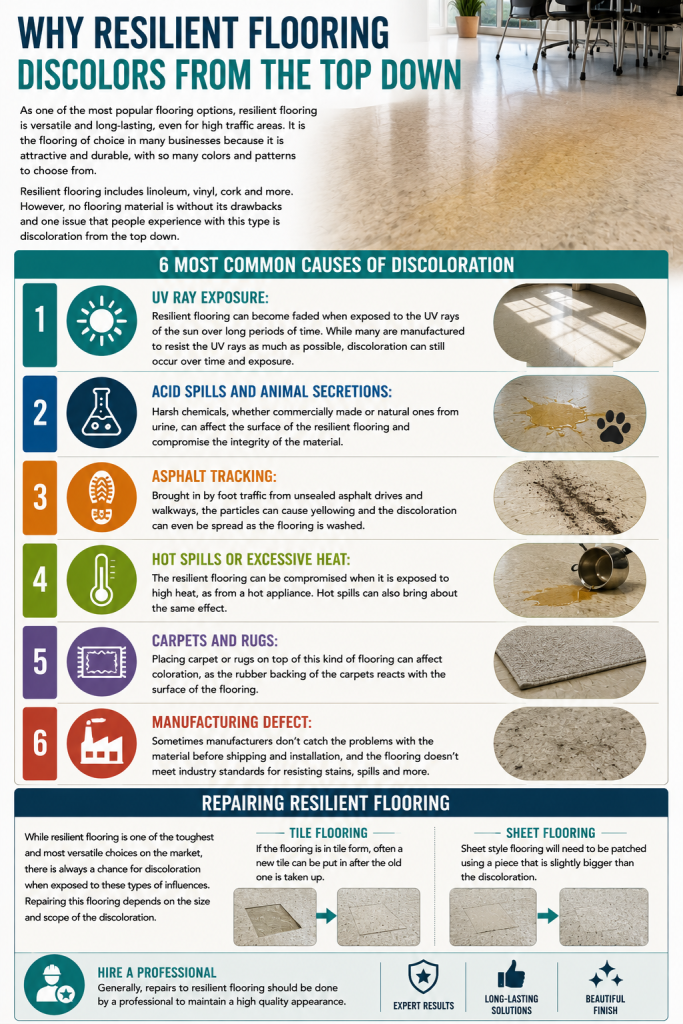
What Causes Resilient Flooring to Discolor from the Top Down?

September 24, 2016 by Flooristics staff 4 Comments

Share Button

As one of the most popular flooring options, resilient flooring is versatile and long-lasting, even for high-traffic areas. It is the flooring of choice in many businesses because it is attractive and durable, with so many colors and patterns to choose from. Resilient flooring includes linoleum, vinyl, cork, and However, no flooring material is without its drawbacks, and one issue that people experience with this type is discoloration from the top down.

Common Causes of Discoloration

Here are the 6 most common causes for resilient flooring to discolor from the top down:

  1. UV Ray Exposure: Resilient flooring can become faded when exposed to the UV rays of the sun over long periods of time.

    Manufacturers design many resilient flooring products to resist damage from UV rays. These protective features help reduce fading and discoloration caused by sunlight exposure.

    However, long-term exposure to sunlight can still affect the flooring over time. Continuous UV exposure may eventually cause fading, yellowing, or uneven discoloration in certain areas of the floor.

  2. Acid Spills and Animal Secretions: Harsh chemicals, whether commercially made or natural ones from urine, can affect the surface of the resilient flooring and compromise the integrity of the material.
  3. Asphalt Tracking: Foot traffic can carry asphalt particles into a building from unsealed asphalt driveways and walkways. These particles can stain resilient flooring and cause yellow discoloration. Cleaning and mopping can sometimes spread the discoloration across a larger area.
  4. Hot Spills or Excessive Heat: High heat can damage resilient flooring and affect its appearance. Hot appliances, heated objects, or hot liquid spills can discolor, soften, or otherwise compromise the flooring material.
  5. Carpets and Rugs: Placing carpet or rugs on top of this kind of flooring can affect coloration, as the rubber backing of the carpets reacts with the surface of the flooring.
  6. Manufacturing Defect: Sometimes manufacturers don’t catch the problems with the material before shipping and installation, and the flooring doesn’t meet industry standards for resisting stains, spills, and more.
Repairing Resilient Flooring

Resilient flooring is one of the toughest and most versatile flooring options on the market. However, certain conditions and contaminants can still cause discoloration over time.

The best repair method depends on the size, severity, and location of the discolored area. Small areas may require only minor repairs, while widespread discoloration may require partial or full replacement.

When resilient flooring comes in tile form, installers can often remove the damaged tile and replace it with a new one. This repair method can restore the appearance of the floor without replacing the entire surface. Sheet-style flooring will need to be patched using a piece that is slightly bigger than the discoloration. Generally, repairs to resilient flooring should be done by a professional to maintain a high-quality appearance.

Filed Under: Floor Safety, Flooring Help, Resilient Tagged With: causes of discoloration in flooring, causes of discoloration in vinyl, damage to resilient flooring, laminate discolor, resilient flooring, resilient foooring discoloration, vinyl discolor

Trackbacks

  1. What is a Lack of Core Bond? - Flooristics, LLC says:
    May 1, 2026 at 4:44 pm

    […] types of flooring materials are actually a composite of many different layers that work together to create tough, beautiful, and versatile flooring. Vinyl, engineered wood, […]

    Reply
  2. When Customers Create Problems With Hard Surface Floors - Flooristics, LLC says:
    May 4, 2026 at 11:51 am

    […] complaints from customers about a job. It’s even more frustrating when the problems are caused by improper care of the flooring by that customer. Flooring contractors who evaluate problems must understand the typical issues […]

    Reply
  3. What Causes Shrinking in Resilient Flooring? - Flooristics, LLC says:
    May 15, 2026 at 12:59 pm

    […] Taking every precaution for the best possible outcome is very important for those who work with resilient flooring. Installers and customers should be aware of what can cause shrinking in resilient floors: […]

    Reply
  4. What Causes a Wear Layer to Delaminate? - Flooristics, LLC says:
    May 16, 2026 at 3:08 pm

    […] of the flooring material may experience damage or other issues. To understand what might cause the wear layer of a vinyl floor to delaminate, it is helpful to understand how vinyl floors are […]

    Reply

Leave a Reply Cancel reply

Your email address will not be published. Required fields are marked *

Call Today! 1.801.574.0387

  • Email
  • Facebook
  • Pinterest
  • RSS
  • Twitter
  • YouTube

Recent Posts

What Happens When Installers Find a Piece of Defective Wood Flooring?

Many business owners and residents are choosing wood flooring because of its beauty, durability, and … [Read More...]

Defining Screeds and Sleepers

When installing hardwood flooring, you need to know all the terminology used in this specialized … [Read More...]

Recent Comments

  • Common Flooring Mistakes By Maintenance Workers - Flooristics, LLC on Certified Floor Inspections
  • How Can Moisture Problems in Concrete be Corrected? - Flooristics, LLC on Certified Floor Inspections
  • What Causes Crowning and Cupping in Wood Floors? - Flooristics, LLC on Certified Floor Inspections

Contact Us

Flooristics, LLC
P.O. Box 91171
Salt Lake City, UT 84109
801.574.0387

View our Financial Disclosure. and Privacy Policy.
© 2014 Flooristics, LLC. All rights reserved.