
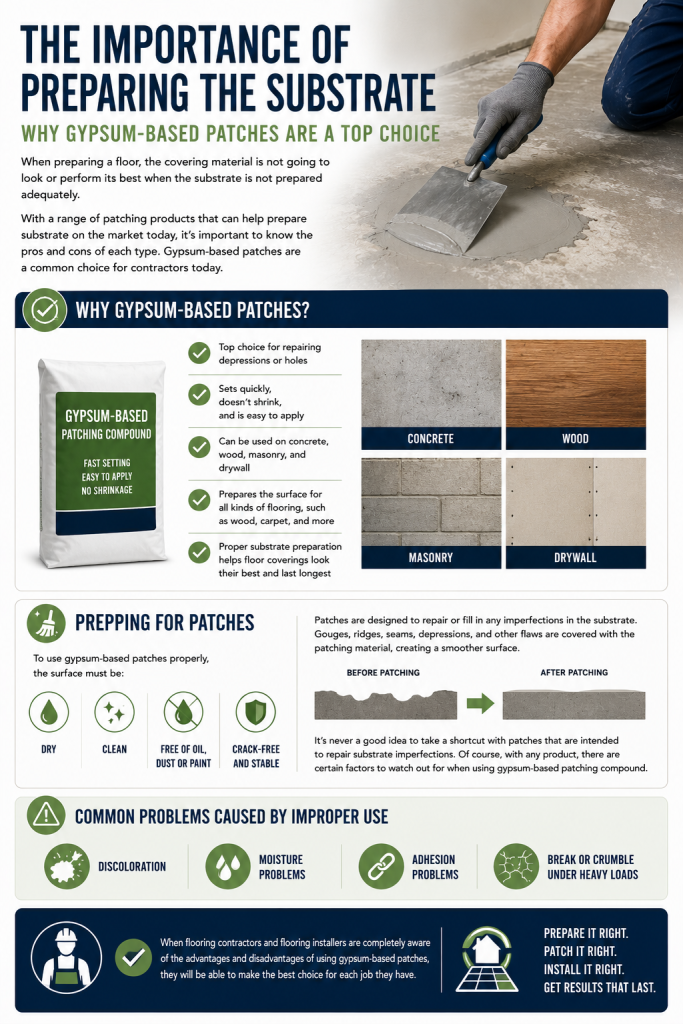
 When preparing a floor, the covering material is not going to look or perform its best when the substrate is not prepared adequately. With a range of patching products that can help prepare substrates on the market today, it’s important to know the pros and cons of each type. Gypsum-based patches are a common choice for contractors today.
Why Gypsum-based Patches?
A gypsum-based patching compound is the top choice for many contractors who are looking to repair depressions or holes. It sets quickly, doesn’t shrink, and is easy to apply. A gypsum-based patch can be used on concrete, wood, masonry, and even in drywall, and it prepares the surface for all kinds of flooring, such as wood, carpet, and more. Floor coverings will always look their best and last longest with proper substrate preparation.
Prepping For Patches
To use gypsum-based patches properly, the surface must be dry, clean, and free of oil, dust, or paint. The surface must also be crack-free and stable.
Of course, with any product, there are certain factors to watch out for when using gypsum-based patching compound.
Here are just a few of the most common problems encountered when using gypsum-based substrates improperly:
- Discoloration
- Moisture problems
- Adhesion problems
- Break or crumble under heavy loads
When flooring contractors and flooring installers are completely aware of the advantages and disadvantages of using gypsum-based patches, they will be able to make the best choice for each job they have.
[…] The American Society for Testing and Materials (ASTM) has created a list of standards for how flooring contractors must perform calcium chloride tests. This standard is designed to ensure that the most accurate results are gathered and that flooring contractors know what to do to minimize the moisture from concrete flooring. […]