
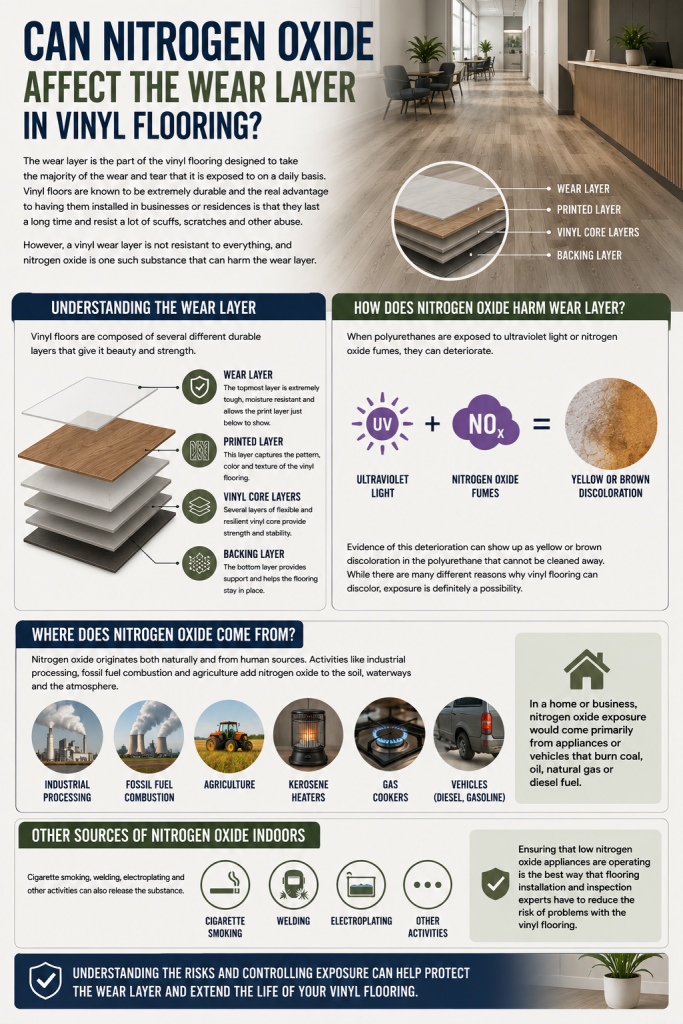
Can nitrogen oxide affect the wear layer in vinyl flooring? The wear layer is the part of the vinyl flooring that handles most of the daily wear and tear. This top layer protects the flooring from damage caused by foot traffic, scuffs, scratches, and general use.
Vinyl floors are known for their durability. Many businesses and homeowners choose vinyl flooring because it lasts a long time and resists many common forms of damage. The wear layer also helps protect the appearance of the flooring over time.
However, the wear layer cannot resist every type of exposure. Certain chemicals and environmental conditions can still damage the surface. Nitrogen oxides are one example of a substance that can harm the wear layer and contribute to discoloration or deterioration.
Understanding the Wear Layer
Manufacturers build vinyl floors with several durable layers that provide both beauty and strength. The backing is the bottom layer, then there are several layers of flexible and resilient vinyl core. The printed layer is what captures the pattern, color, and texture of the vinyl flooring. The wear layer is the topmost layer, and it is extremely tough, moisture-resistant, and allows the print layer just below to show.
How Does Nitrogen Oxide Harm the Wear Layer?
When polyurethanes are exposed to ultraviolet light or nitrogen oxide fumes, they can deteriorate. Evidence of this deterioration can show up as yellow or brown discoloration in the polyurethane that cannot be cleaned away. While there are many different reasons why vinyl flooring can discolor, exposure is definitely a possibility.
Nitrogen oxide originates both naturally and from human sources. Activities like industrial processing, fossil fuel combustion, and agriculture add nitrogen oxides to the soil, waterways, and the atmosphere. In a home or business, nitrogen oxide exposure would come primarily from appliances or vehicles that burn coal, oil, natural gas, or diesel fuel, like kerosene heaters or gas cookers.
Cigarette smoking, welding, electroplating, and other activities can also release the substance. Ensuring that low nitrogen oxide appliances are operating is the best way that flooring installation and inspection experts have to reduce the risk of problems with the vinyl flooring.


Leave a Reply