
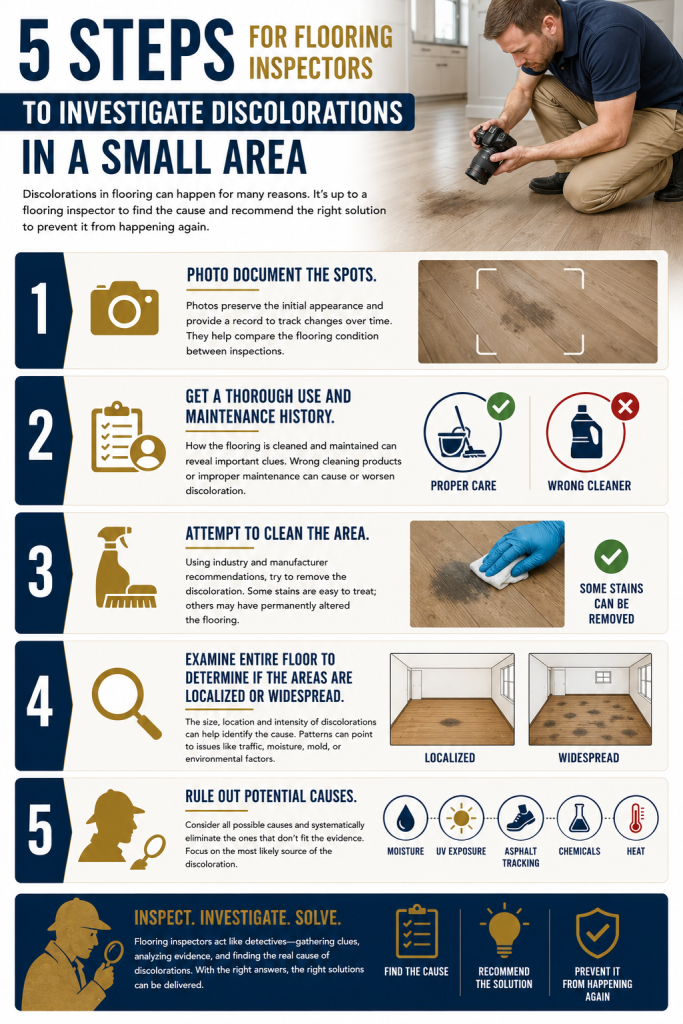
Small areas of flooring discoloration are common in both commercial and residential properties. These discolorations can vary in size, color, and intensity depending on the cause.
There are 5 steps that a flooring inspector should follow when trying to conduct a thorough inspection of discolorations in a small area.
- Photo-document the spots. Photographs help preserve physical evidence of the affected area. Flooring inspectors should document the discoloration as early as possible during the investigation. Photos can capture the original appearance, size, color, and location of the problem. Inspectors can also use these images to monitor changes over time. By comparing photographs from different inspections, inspectors can determine whether the discoloration is spreading, becoming darker, or improving after cleaning or repair efforts. Photos can provide contrasts of the flooring condition between inspections as well.
- Get a thorough use and maintenance history from the owner. How the flooring is being cared for and cleaned can provide a lot of insight for the flooring inspector. Even the best of intentions can end up causing more problems when it comes to discolored flooring. A good example of this is a maintenance crew that doesn’t fully clean the flooring, then reseals it with dirt and grime underneath the top layer. Another example is a cleaning crew using the wrong type of cleaner, which causes discoloration.
- Attempt to clean the area. Using industry and manufacturer recommendations, the flooring inspector can try to remove the discoloration. Some causes of discoloration are easily treated like a spill stain, while other causes have actually changed the chemical composition of the flooring, like exposure to UV rays or heat.
- Examine the entire floor to determine if the areas are localized or widespread. The size, location, and intensity of the discolorations can provide a lot of clues as to the cause and the cure. Stains in high traffic areas only may be the result of asphalt tracking, while a stain around the perimeter of a room may be from mold or moisture.
- Rule out potential causes. As flooring inspectors investigate discoloration problems, they should consider many possible causes. Different types of stains, environmental conditions, maintenance practices, and contaminants can all contribute to flooring discoloration. During the investigation, inspectors often develop several working theories about the source of the problem. As they gather more evidence and information, they can eliminate theories that do not match the observed conditions. This process helps the flooring inspector narrow the investigation and focus on the most likely cause of the discoloration.
Flooring inspectors must act like detectives in discovering clues about what is causing discolorations in the flooring and why it is happening. Once the inspector understands what is going on, they can work with the owner to implement the proper solution.
[…] Plasticizer migration out of sheet vinyl is something that is all too common in the flooring industry. The consequence of this is a range of floor compatibility issues that can lead to both short-term and long-term problems. Flooring installers need to know about the causes and solutions for this problem so they can make sure the risk of problems is minimized. […]