
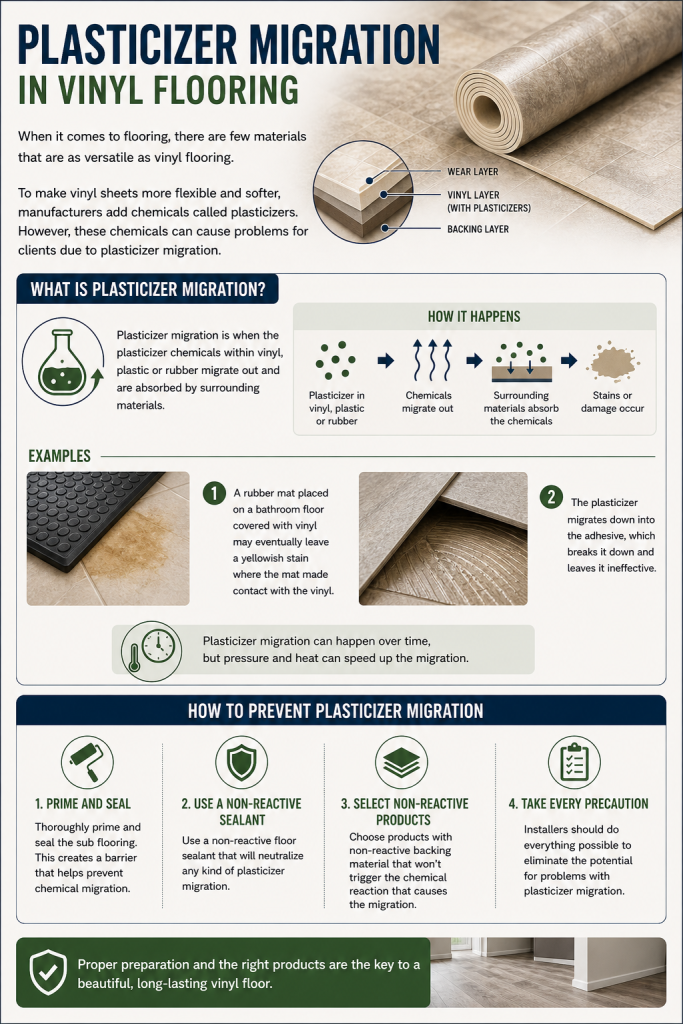
 Plasticizer migration out of sheet vinyl is something that is all too common in the flooring industry. The consequence of this is a range of floor compatibility issues that can lead to both short-term and long-term problems. Flooring installers need to know about the causes and solutions for this problem so they can make sure the risk of problems is minimized.
Plasticizer migration occurs when adhesive, new or leftover, creates a chemical reaction with the PVC in the new sheet vinyl. Plasticizer is a key part of the vinyl that keeps it from being brittle. When plasticizer migration happens, sheet vinyl can soften, discolor, loosen, crack, or turn brittle.
The best way to avoid this in sheet vinyl is to prime and seal the subfloor. There are many non-reactive floor sealants available that can minimize the effects of a reaction and cover up old adhesive that may trigger them as well. An additional method to reduce the risk is to select sheet vinyl with a non-reactive backing. This is less likely to cause that chemical reaction as well. When using these two methods together, flooring installers are doing everything they can to eliminate the problems associated with plasticizer migration.
Can moisture and high pH also cause plasticizer migration?