
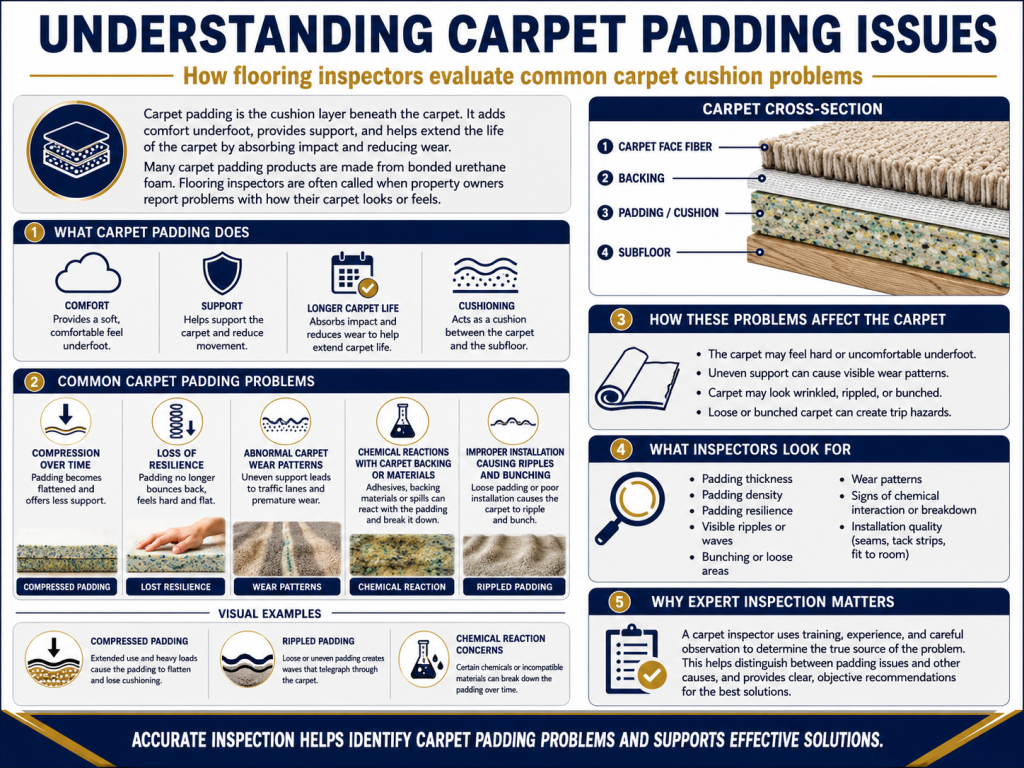
 Carpet padding comes in a range of styles, types, and thicknesses. It’s the cushion layer that lies underneath the carpeting. It increases the comfort as well as the lifespan of the carpet. Usually, padding is made from scrap pieces of urethane foam. They bond together to form sheets that range in thickness. It’s common for a carpet flooring inspector to go to a job site where the owner is complaining about problems with the padding.
It’s no secret that padding provides softness and comfort. People come to expect that feeling with wall-to-wall carpeting. However, there can sometimes be issues with carpet padding that cause problems. Whether it’s a problem with the installation or something that happened during manufacturing, the carpet inspector needs to figure it out.
Problems
One of the most common problems with padding is that over time, it compresses and no longer retains the ability to spring back. This density makes the flooring hard and uncomfortable to walk on. This compression can also lead to abnormal wear and tear patterns in the carpet fibers, which causes the carpet to look worse than it should.
Another common problem with padding is that it may have a chemical reaction with something within the carpet backing. Common chemicals in padding are acetaldehyde, benzene, formaldehyde, and more. They are found in some carpet padding and therefore could trigger a chemical reaction. The chemicals react with dye, fibers, backing, or other fiber treatment in some special cases.
Improper installation of the padding is yet another common problem. Installed improperly, the padding can ripple and bunch, causing the carpet above it to do the same. Not only does this make the carpet look bad, but it can also lead to tripping and uneven wear and tear.
No matter what the padding issue is, a carpet inspector needs to use all their skills. It’s up to them to figure out the problem and offer recommendations on the solution.
Leave a Reply