
 Dear Rob:
We currently have carpet over an old wood subfloor that has lifted off a cement slab. The floor has been flooded four times over the years, and now the floor is starting to squeak and feels softer in some places than in others. My dad does not want to tear up the floor because he believes that it is all rotted underneath. Is there any possible way to have either another wood floor added on top of the existing wood floor, or maybe tile put on top, or does it have to be all torn out and started all over again?
Thanks,
Lilian
Dear Lilian:
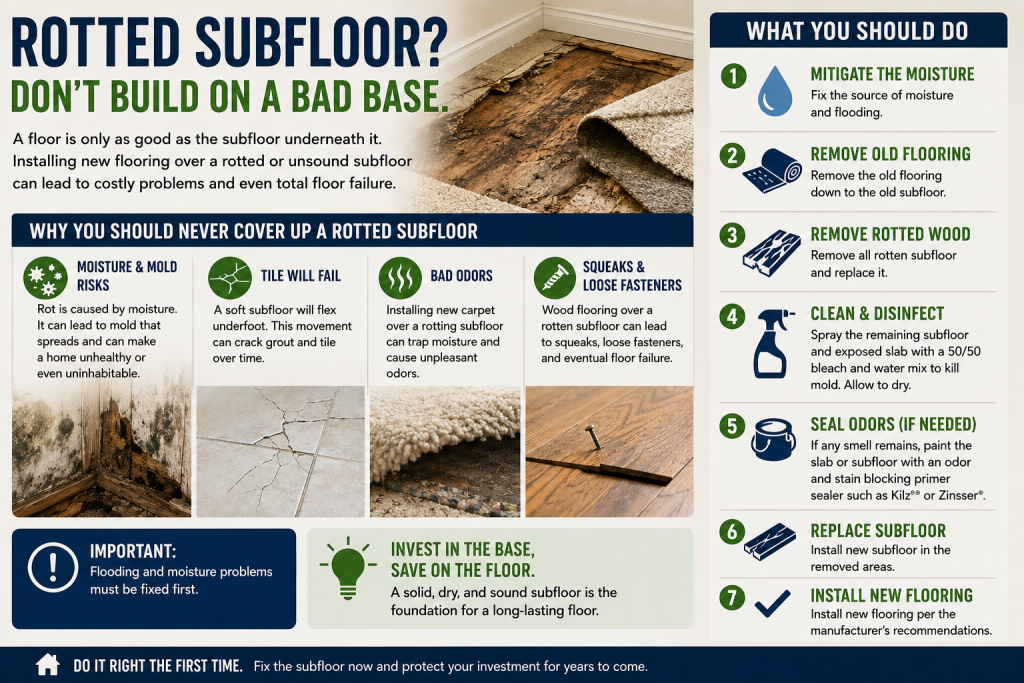
A floor is only as good as the subfloor that is underneath it. It is never a good idea to install a new floor over a subfloor that is rotting or otherwise unsound, as it can eventually lead to problems and even total failure of the new floor.
There are several reasons for this:
- Rotting subfloors are caused by moisture problems, and moisture and rot can lead to mold contamination issues, which can spread to other parts of the home. In some cases, whole houses can be made uninhabitable altogether by mold. It is never a good idea to let a mold problem go unchecked.
- A floor that is rotted is often unsound and soft. If you install tile over a soft subfloor, it will deflect or bounce when you walk on it. That bouncing will eventually lead to cracking of the grout and tile.
- If you install new carpet over a rotting subfloor, it can lead to bad odors.
- If you install wood flooring over a rotten subfloor, you may end up with squeaking boards and loose fasteners that will cause the wood floor to fail over time.
So, before you install your new floor, I recommend the following:
- Mitigate the source of moisture and flooding.
- Remove the old flooring down to the old subfloor.
- Remove all rotten wood in the subfloor and replace it.
- Spray the remaining subfloor and exposed cement slab with a 50/50 bleach and water mix to kill remaining mold and allow it to dry.
- If any smell remains, paint the slab or subfloor with an odor- and stain-blocking primer sealer from manufacturers such as Kilz
or Zinsser
- Replace the removed subfloor.
- Install new flooring per manufacturer’s recommendations.
Good luck,
Rob

Leave a Reply