Flooristics, LLC

Article Search

Family Owned, Locally Operated
  • Home
  • Blog
    • Videos
    • Podcasts
    • Carpet and Rugs
    • Expert Witness
    • Floor Safety
    • Flooring Help
    • Hardwood and Laminate
    • Podcasts
    • Resilient
    • Tile and Stone
    • Tools
  • About
  • Contact
  • Floor Inspections
  • Expert Witness Services
  • Walkway Audits
    • Walkway Audit Process
    • OSHA “Qualified Person”

How Does Alkali Reach the Surface of a Concrete Floor?

February 1, 2017 by Flooristics staff 1 Comment

Share Button

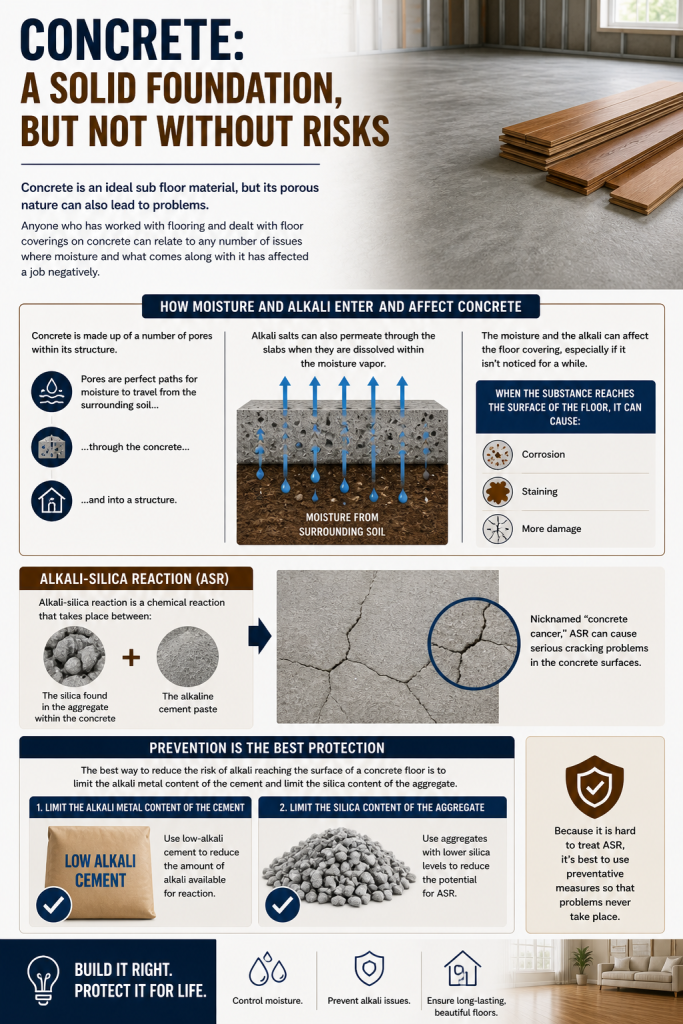
Concrete is an ideal subfloor material, but its porous nature can also lead to problems. Anyone who has worked with flooring and dealt with floor coverings on concrete can relate to any number of issues where moisture and what comes along with it has affected a job negatively.

Concrete is made up of several pores within its structure. These pores are perfect paths for moisture to travel from the surrounding soil, through the concrete, and into a structure. Alkali salts can also permeate through the slabs when they dissolve in moisture vapor. Moisture and alkali can affect the floor covering, especially when people do not notice the problem for a while. When the substance reaches the surface of the floor, it can cause corrosion, staining, and more damage.

Alkali-silica reaction is a chemical reaction that takes place between the silica found in the aggregate within the concrete and the alkaline cement paste. Nicknamed “concrete cancer,” ASR can cause serious cracking problems in the concrete surfaces.

The best way to reduce the risk of alkali reaching the surface of a concrete floor is to limit the alkali metal content of the cement and limit the silica content of the aggregate. Because it is hard to treat ASR, it’s best to use preventative measures so that problems never take place.


Filed Under: Floor Safety, Flooring Help, Hardwood and Laminate, Resilient Tagged With: alkali and concrete, alkali concrete, alkali-silica reaction, ASR, ASR silica, concrete floor, concrete floor moisture test, concrete flooring, concrete moisture tests, concrete sub floor

Trackbacks

  1. Cement and Concrete: What's the Difference? - Flooristics, LLC says:
    April 27, 2026 at 11:44 am

    […] is a combination of several ingredients, such as calcium, aluminum, iron, limestone, shale, clay, silicon, and more.  Manufacturers […]

    Reply

Leave a Reply Cancel reply

Your email address will not be published. Required fields are marked *

Call Today! 1.801.574.0387

  • Email
  • Facebook
  • Pinterest
  • RSS
  • Twitter
  • YouTube

Recent Posts

Hire a California Slip and Fall Expert Witness Today

Rob McNealy of Flooristics has many years of flooring experience and is the California slip and fall … [Read More...]

Hire an Augusta Slip and Fall Expert Witness Today

Maine business owners and legal experts should become familiar with the best Augusta slip and fall … [Read More...]

Recent Comments

  • Approved Underlayment and Subfloor Materials for Vinyl - Flooristics, LLC on What Surface Is More Resistant to Scuffing?
  • What is a Vinyl Printing Defect? - Flooristics, LLC on What Causes Hard Surface Floors to Turn Yellow
  • Causes and Solutions for Vinyl Seam Failure - Flooristics, LLC on Certified Floor Inspections

Contact Us

Flooristics, LLC
P.O. Box 91171
Salt Lake City, UT 84109
801.574.0387

View our Financial Disclosure. and Privacy Policy.
© 2014 Flooristics, LLC. All rights reserved.