
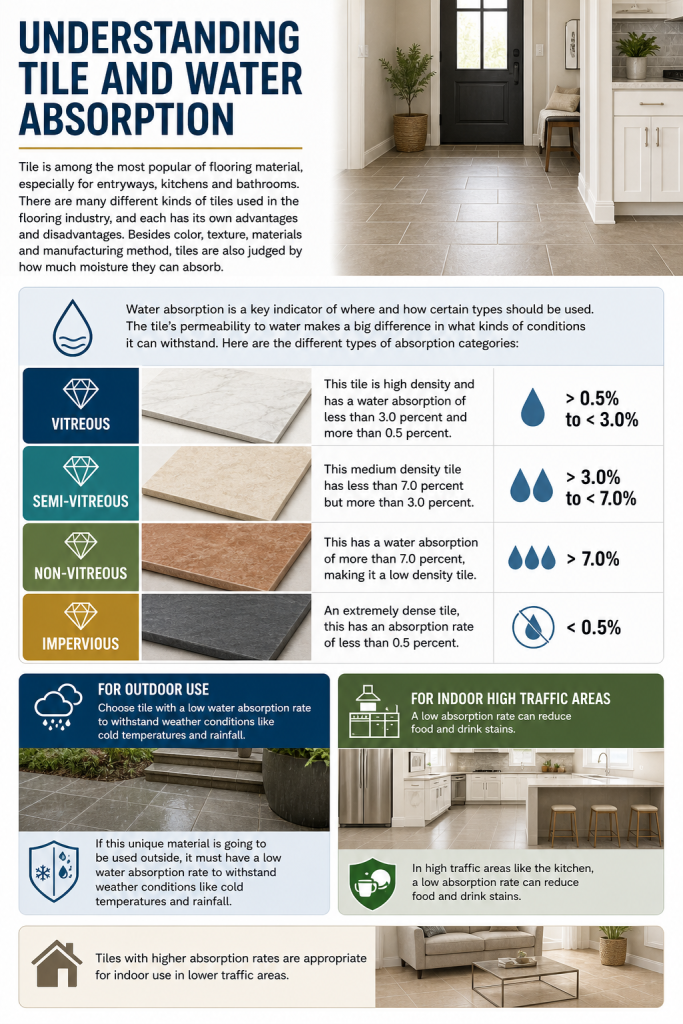
 Tile is among the most popular of flooring materials, especially for entryways, kitchens, and bathrooms. The flooring industry uses many different kinds of tiles, and each type offers its own advantages and disadvantages. In addition to color, texture, materials, and manufacturing method, manufacturers and installers also judge tiles by how much moisture they absorb.
Water absorption is a key indicator of where and how certain types should be used. The tile’s permeability to water makes a big difference in what kinds of conditions it can withstand. Here are the different types of absorption categories:
Vitreous: This tile is high-density and has a water absorption of less than 3.0 percent and more than 0.5 percent.
Semi-vitreous: This medium-density tile has less than 7.0 percent but more than 3.0 percent.
Non-vitreous: This has a water absorption of more than 7.0 percent, making it a low-density tile.
Impervious: An extremely dense tile, this has an absorption rate of less than 0.5 percent.
If this unique material is going to be used outside, it must have a low water absorption rate to withstand weather conditions like cold temperatures and rainfall. In high-traffic areas like the kitchen, a low absorption rate can reduce food and drink stains. Tiles with higher absorption rates are appropriate for indoor use in lower traffic areas.
Leave a Reply