
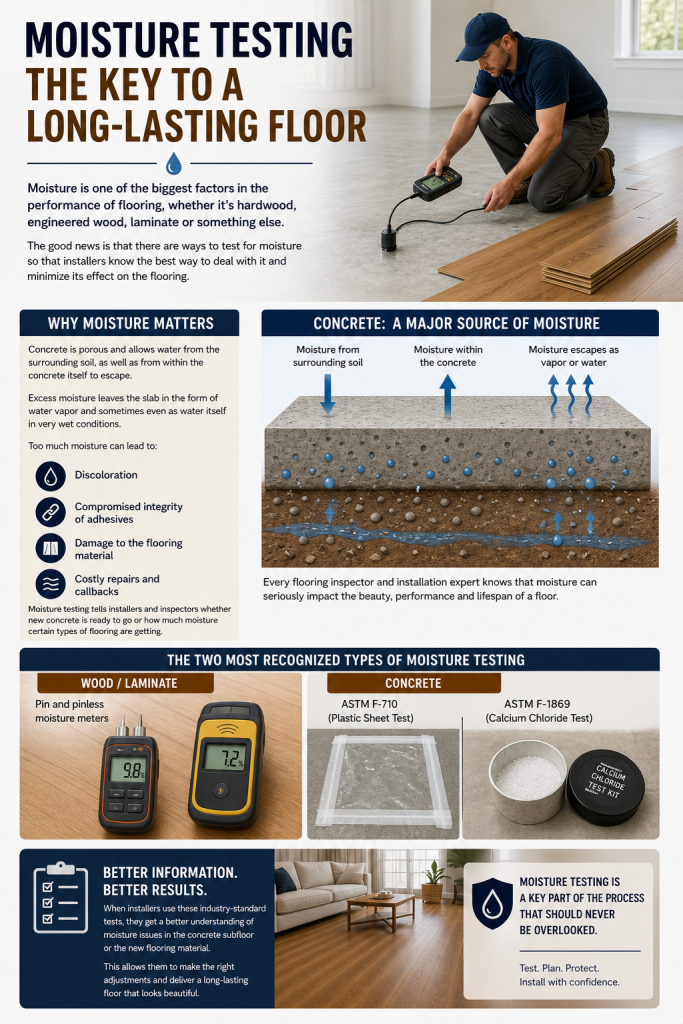
 Moisture is one of the biggest factors in the performance of flooring, whether it’s hardwood, engineered wood, laminate, or something else. Flooring installers and inspectors know that concrete is a key contributor to introducing moisture to homes, offices, and other buildings. Moisture testing is an important part of installing any floor. The good news is that there are ways to test for moisture so that installers know the best way to deal with it and minimize its effect on the flooring.
Concrete is porous and allows water from the surrounding soil, as well as from within the concrete itself, to escape.
The two most recognized types of moisture testing are:
Wood/laminate: Pin and pinless moisture meters
Concrete: ASTM F-710 and ASTM F-1869
When flooring installers use these industry-standard tests, they’ll get a better idea of what the moisture issues might be with the concrete subfloor or the new flooring material. Then, they will be able to make adjustments appropriately and give the client a long-lasting floor that looks beautiful. Moisture testing is a key part of the process that should never be overlooked.

[…] is something that happens with flooring material that contains wood, as the material absorbs and releases moisture. Expansion and contraction can cause multiple problems if installers do not address them during the […]