Flooristics, LLC

Article Search

Family Owned, Locally Operated
  • Home
  • Blog
    • Videos
    • Podcasts
    • Carpet and Rugs
    • Expert Witness
    • Floor Safety
    • Flooring Help
    • Hardwood and Laminate
    • Podcasts
    • Resilient
    • Tile and Stone
    • Tools
  • About
  • Contact
  • Floor Inspections
  • Expert Witness Services
  • Walkway Audits
    • Walkway Audit Process
    • OSHA “Qualified Person”

What Might Cause Discoloration On Resilient Flooring?

January 20, 2017 by Flooristics staff 4 Comments

Share Button

discoloration floor

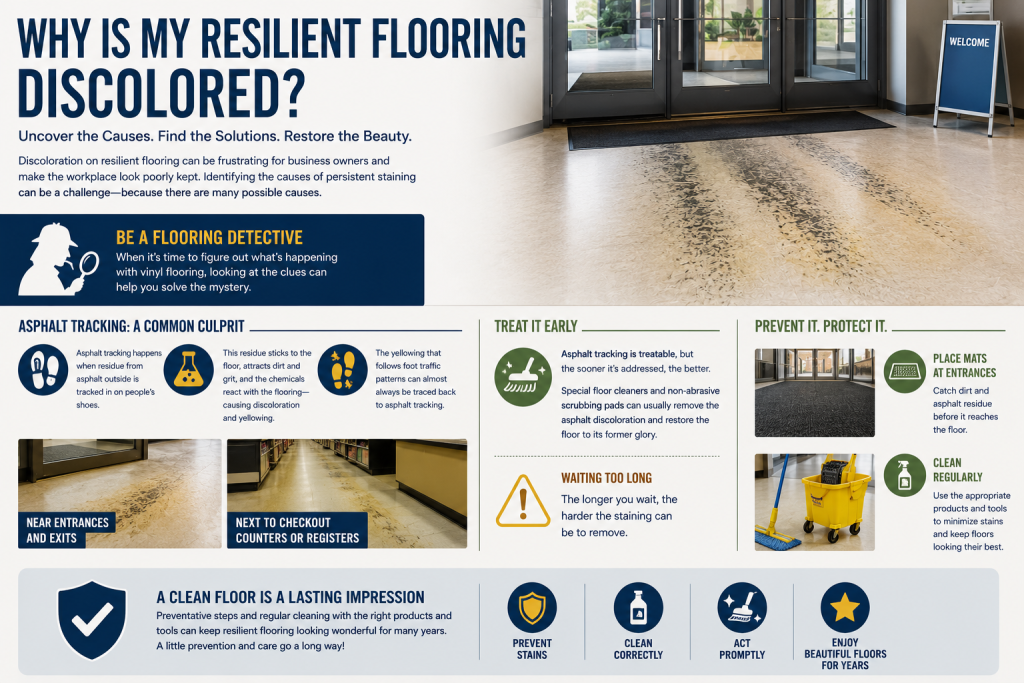
Discoloration on resilient flooring can be frustrating for business owners and cause the workplace to look poorly kept. Identifying the causes of persistent staining may be one of the biggest challenges for flooring inspectors because there are many different causes. When it’s time to be a detective and figure out what’s happening with vinyl flooring, looking at the clues can help figure out what’s going on.

Resilient flooring is often used in commercial spaces like stores and offices. When discoloration or yellowing begins to appear in the field areas of these high traffic locations, one of the first things to look at is whether asphalt tracking is to blame.

Asphalt tracking takes place when the floor turns yellowish in the areas where people walk the most. Often this is near the entrances and exits and next to checkout counters or registers. When the residue from asphalt outside is collected on people’s shoes and tracked inside, it can stick to the surface of the flooring at attract dirt and grit. The chemicals also react with the flooring, causing discolorations. The yellowing that appears and coincides with foot traffic patterns can almost always be traced back to asphalt tracking.

Asphalt tracking is definitely treatable, but the sooner it can be addressed, the better. Special floor cleaners and non-abrasive scrubbing pads can usually remove the asphalt discoloration and restore the floor to its former glory. However, waiting too long can make it harder to get rid of the staining.

Owners can present asphalt tracking by placing mats at the entrance to catch a lot of that residue. Regular cleaning with the appropriate products and tools can also keep these types of stains to a minimum. Preventative steps as well as cleaning existing stains with the appropriate products and tools can keep resilient flooring looking wonderful for many years.

Filed Under: Resilient Tagged With: asphalt tracking, cause of yellow floor, problems with yellow floor, resilient floor stain, resilient floor staining, tracking, yellow resilient floor

Comments

  1. Bob says

    February 14, 2023 at 5:57 am

    VCT in Dollar Tree yellowing in all the aisles caused by asphalt tracking. No wax present. Likely replaced and never serviced by a floor company. Contacted to strip and wax but the tiles are ruined and I don’t want it to reflect on me when they see shiny discolored floors.

    Reply
    • admin says

      November 22, 2024 at 11:07 am

      That is an important thing to be thinking about. I always tell installers that “it’s better to walk away from a job, if don’t think you will be able to make the customer happy.”

      Reply

Trackbacks

  1. Removing Iodine Stains from Vinyl Floors - Flooristics, LLC says:
    April 27, 2026 at 8:48 pm

    […] Having problems with iodine stains on the floor? Vinyl flooring is one of the toughest options on the market today when it comes to resisting wear and tear, scratches, and stains. However, even the best vinyl flooring has a hard time resisting iodine. Iodine is one of those chemicals that seems to stain just about everything it comes in contact with. The good news is that there are options for cleanup if someone accidentally drips or spills iodine onto a vinyl floor. […]

    Reply
  2. What is Plasticizer Migration? - Flooristics, LLC says:
    May 1, 2026 at 3:33 pm

    […] For example, a rubber mat placed on a bathroom floor covered with vinyl may eventually leave a yellowish stain where the mat made contact with the vinyl. Another example is that the plasticizer migrates down […]

    Reply

Leave a Reply Cancel reply

Your email address will not be published. Required fields are marked *

Call Today! 1.801.574.0387

  • Email
  • Facebook
  • Pinterest
  • RSS
  • Twitter
  • YouTube

Recent Posts

How Much Seam Sealer is Used on a Glue-Down Installation?

Carpet installers apply seam sealer to carpet edges before sealing them with tape. It prevents the … [Read More...]

House Plants and Hardwood Floors – How to Protect Your Floor Finish

Dear Rob: We've installed a hardwood floor in our sun room which is loaded with plants. Other than … [Read More...]

Recent Comments

  • Floating Wood Floors Over Existing Floors - Flooristics, LLC on Solid Wood Can Be Installed On What Grade Levels?
  • What Might Cause Discoloration in Lower Levels of Vinyl Flooring? - Flooristics, LLC on How To Install a Sheet Vinyl Over an Existing Floor
  • What Causes Poor Performance in a Hard Surface Floor? - Flooristics, LLC on What Surface Is More Resistant to Scuffing?

Contact Us

Flooristics, LLC
P.O. Box 91171
Salt Lake City, UT 84109
801.574.0387

View our Financial Disclosure. and Privacy Policy.
© 2014 Flooristics, LLC. All rights reserved.