
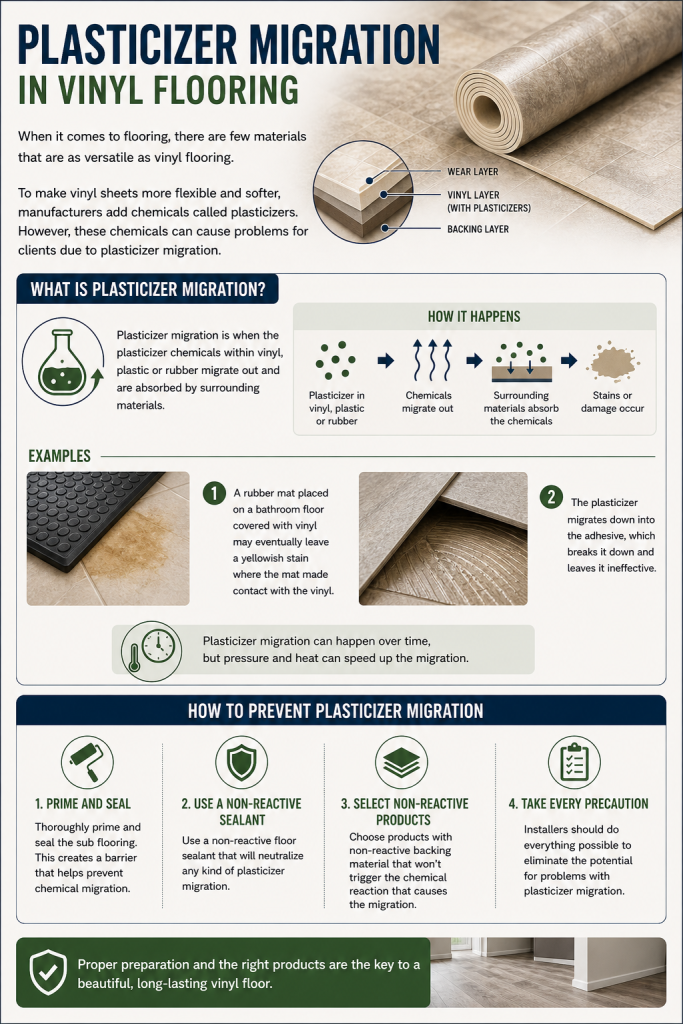
 When it comes to flooring, few materials are as versatile as vinyl. To make the vinyl sheets more flexible and softer, chemicals called plasticizers are added. However, these chemicals have the potential to cause some problems for clients due to plasticizer migration.
What is plasticizer migration? Plasticizer chemicals within vinyl, plastic, or rubber migrate out and surrounding materials absorb them. For example, a rubber mat placed on a bathroom floor covered with vinyl may eventually leave a yellowish stain where the mat made contact with the vinyl. Another example is that the plasticizer migrates down into the adhesive, which breaks it down and leaves it ineffective. Migration can happen over time, but pressure and heat can speed up that process.
The best way to avoid this chemical reaction in sheet vinyl is to thoroughly prime and seal the subflooring. It’s also a good idea to use a non-reactive floor sealant that will neutralize any kind of plasticizer migration. It’s also possible to select products that have non-reactive backing material that won’t trigger the chemical reaction that causes the migration. Installers should do everything possible to eliminate the potential for problems with plasticizer migration.
I HAVE A1965 BEDFORD CA DORMOBILE THAT I AM RESTORING, AND IT AS A PLASTIC/ VINYLE MATERIAL TOP THAT IS GOING HARD (LESS FLEXIBLE) . I HAVE READ VARIOUS ITEMS ABOUT WASHING IT THEN APPLYING BABY OIL OR MINERAL OIL, TO SEEP BACK INTO THE MATERIAL TOREPLACE THE LOST OILS .
Those are really cool campers and that seems like a fun project. I would check with an auto parts store about vinyl restoration products.