
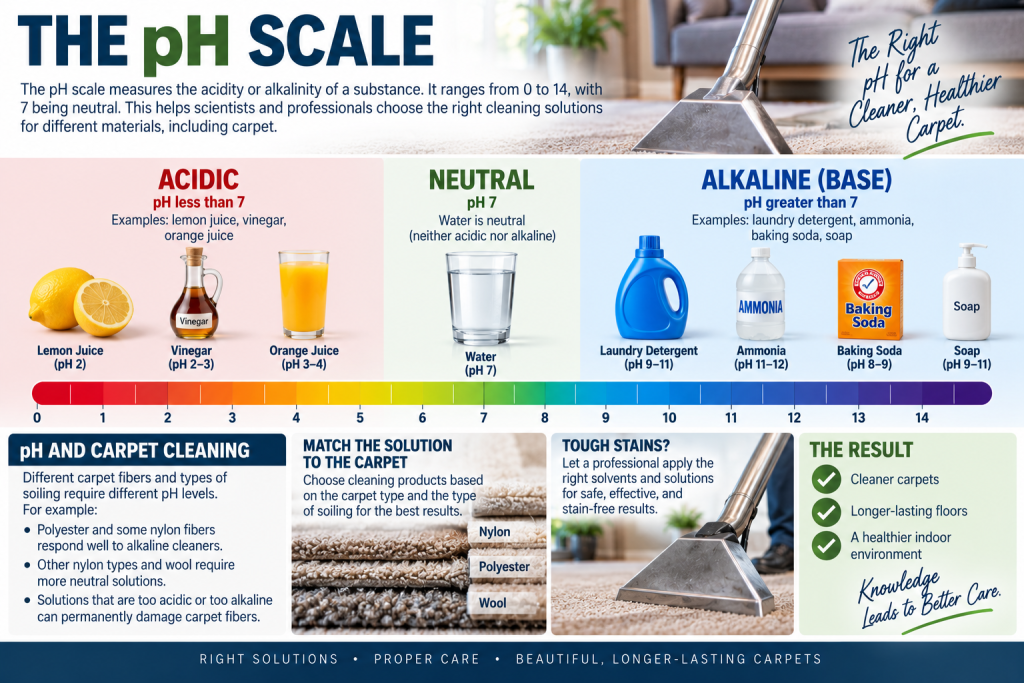
 The pH scale measures the acidity or alkalinity of a substance. It was designed by a Danish chemist and was introduced to the scientific community in 1909. The purpose of a pH scale is to give scientists and researchers a measurement that indicates whether a substance is acidic, alkaline, or neutral.
The pH scale ranges from 0 up to 14, with 7 acting as the neutral reading. Water registers at a 7 on the pH scale, neither alkaline nor acidic. If a substance is lower than 7, it is an acidic solution. Examples of acidic solutions include lemon juice, vinegar, and orange juice. If the substance is higher than 7, it is alkaline or a base. Examples of alkaline substances include laundry detergent, ammonia, baking soda, and soap.
When it comes to carpet cleaning, different solutions with varying pH levels can be used. It all depends on the type of carpet fibers and the type of soiling. For example, polyester and some nylon carpet fibers do well with alkaline cleaners, while other types of nylon and wool require a more neutral cleaning solution. If a substance is too acidic or too alkaline, it can permanently damage the carpet.
With serious carpet stains, it’s best to have a professional apply the solvents and solutions so they can match the right product to the flooring for the best, stain-free results.

Leave a Reply