
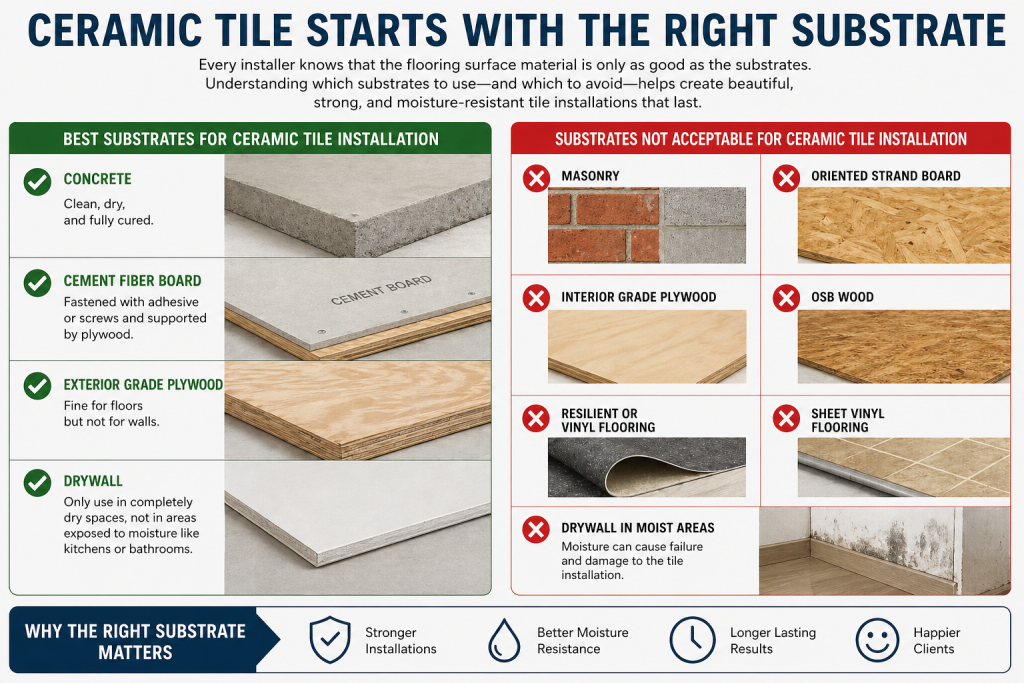
 Every installer knows that the flooring surface material is only as good as the substrates. Ceramic tile can be placed in a number of different locations for many different uses. All types of tile need a good substrate or base on which to adhere. However, flooring installers need to know about the different types of substrates and which ones are not acceptable for ceramic tile installations.
The best substrates for ceramic tile installation include:
- Concrete: Clean, dry, and fully cured
- Cement fiber board: fastened with adhesive or screws and supported by plywood
- Exterior Grade Plywood: Fine for floors but not for walls.
- Drywall: Only use in completely dry spaces, not in areas exposed to moisture like kitchens or bathrooms.
Several substrates are not acceptable for ceramic tile installation:
- Masonry
- Oriented strand board
- Interior Grade Plywood
- OSB Wood
- Resilient or Vinyl Flooring
- Sheet Vinyl Flooring
- Drywall in moist areas
Today’s ceramic tile and installation practices are focused on making clients happy and creating surfaces that are beautiful, strong, and moisture-resistant. Paying attention to the substrate for ceramic tile has many benefits for installers.

[…] to moisture and acts as a “container” of sorts. When moisture in the form of water vapor is present in concrete, pressure can build up and affect the integrity of the […]