Flooristics, LLC

Article Search

Family Owned, Locally Operated
  • Home
  • Blog
    • Videos
    • Podcasts
    • Carpet and Rugs
    • Expert Witness
    • Floor Safety
    • Flooring Help
    • Hardwood and Laminate
    • Podcasts
    • Resilient
    • Tile and Stone
    • Tools
  • About
  • Contact
  • Floor Inspections
  • Expert Witness Services
  • Walkway Audits
    • Walkway Audit Process
    • OSHA “Qualified Person”

What Might Cause Discoloration in Lower Levels of Vinyl Flooring?

January 23, 2017 by Flooristics staff 5 Comments

Share Button

discoloration

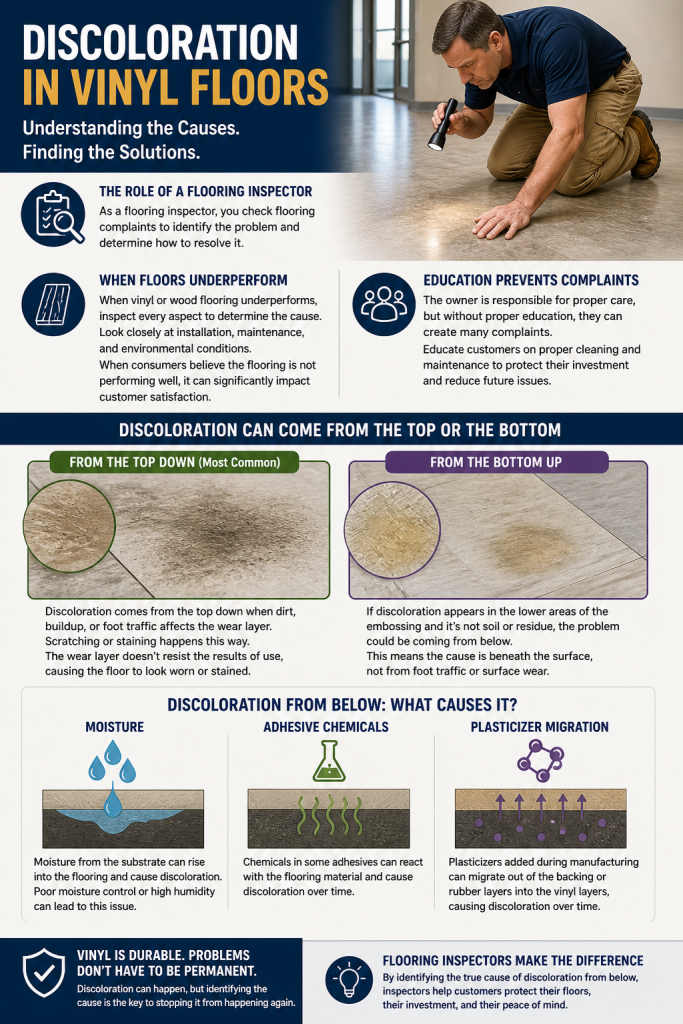
When working with vinyl floors, it’s not unheard of to have to deal with discoloration. Ideally, this kind of hard surface floors will last for many years without any kind of problem. Sometimes discoloration pops up and it’s up to a flooring contractor or inspector to figure out what’s going on with the vinyl. While it may seem like a mystery, the cause is usually limited to just a couple of conditions.

More About Discoloration in Vinyl Floors

Most of the time, discoloration comes from the top down, meaning that the buildup or soil from foot traffic is affecting the wear layer of the vinyl and not resisting the results of use. Often, scratching or staining can occur this way. It’s the most common way that vinyl floors become discolored or otherwise stained, making it look less than ideal for businesses and residents.

However, if flooring inspectors can see discoloring in the lower areas of the embossing and it does not look like soil or a residue buildup, the problem could be from the bottom up. It is possible for this odd coloring to come from underneath instead of from the top. But how can this happen when no foot traffic is affecting the bottom layers of the flooring material?

Discoloration From Below

When discoloring comes up from the substrate, it is generally caused by moisture or chemicals from the adhesive. It can also be caused by a condition called plasticizer migration. This happens when the plasticizers that are added to any rubber material or layers during the manufacturing process. Over a period of time, the plasticizers can migrate out of the rubber into the other vinyl layers.

For the most part, there are few flooring materials that are as durable and beautiful as vinyl, but discoloration can occur so it’s a good idea to figure out what is happening so it doesn’t repeat. Flooring inspectors are definitely going to be able to help their customers when they can identify what is causing discoloring from below.

Filed Under: Hardwood and Laminate, Resilient Tagged With: care of vinyl floor, causes of discoloration in vinyl, cleaning a vinyl floor, vinyl floor discoloration, yellow vinyl floor

Trackbacks

  1. Plasticizer Migration: What Is It? - Flooristics, LLC says:
    April 25, 2026 at 2:55 pm

    […] of the unique issues that vinyl flooring may encounter is plasticizer migration from rubber-backed mats. People often see this as a yellowish permanent stain on vinyl flooring when a rubber mat sits in […]

    Reply
  2. Proper Side Match for Linoleum Floors - Flooristics, LLC says:
    April 27, 2026 at 12:10 pm

    […] range from simple monochromatic tile looks to complicated patterns that dazzle the eye. When installing patterned linoleum, it’s important to ensure a proper side match. This means that the pattern on both sides of the […]

    Reply
  3. How Do Mold and Mildew Get Under Vinyl Flooring? - Flooristics, LLC says:
    April 27, 2026 at 8:51 pm

    […] When grayish stains appear from the bottom up on a vinyl floor, it is most likely signaling that mold or mildew is present. As most people know, mold and mildew thrive in moist, dark places, so if they are present in the vinyl, it’s a sign that there is too much moisture in the substrate. This can come from an ineffective or non-existent moisture barrier or a leak from somewhere nearby. No matter what the source, it’s not good to have moisture trapped underneath the vinyl. […]

    Reply
  4. What Causes Air Bubbles in Sheet Vinyl Floor Seams? - Flooristics, LLC says:
    April 27, 2026 at 9:24 pm

    […] a client notices that their sheet vinyl floor has tiny air bubbles in the seam sealer along the length of the seam, they can be understandably […]

    Reply
  5. What Causes Ambering in Linoleum? - Flooristics, LLC says:
    April 29, 2026 at 10:12 am

    […] immune to discoloration, and there are occasions when linoleum may acquire a yellowish cast. This discoloration is known as […]

    Reply

Leave a Reply Cancel reply

Your email address will not be published. Required fields are marked *

Call Today! 1.801.574.0387

  • Email
  • Facebook
  • Pinterest
  • RSS
  • Twitter
  • YouTube

Recent Posts

Advantages of Electric Radiant Floor Heating System

Electric radiant floor heat is a good addition or alternative to other home heating systems. Made … [Read More...]

Delaware Flooring Defects Expert Witness Brings Facts to the Case

When a business owner suspects a flooring defect has caused problems at the workplace, it may be a … [Read More...]

Recent Comments

  • What is the Industry Standard for Bow and Skew? - Flooristics, LLC on Foods That Cause the Most Stubborn Floor Stains
  • What Causes Stress Cracks in Wood Floors? - Flooristics, LLC on What Happens When Installers Find a Piece of Defective Wood Flooring?
  • What Sub Floor is Best for Ceramic Tile? - Flooristics, LLC on What’s The Best Underlayment and Sub-floor Types for Ceramic Tile?

Contact Us

Flooristics, LLC
P.O. Box 91171
Salt Lake City, UT 84109
801.574.0387

View our Financial Disclosure. and Privacy Policy.
© 2014 Flooristics, LLC. All rights reserved.