
Hardwood flooring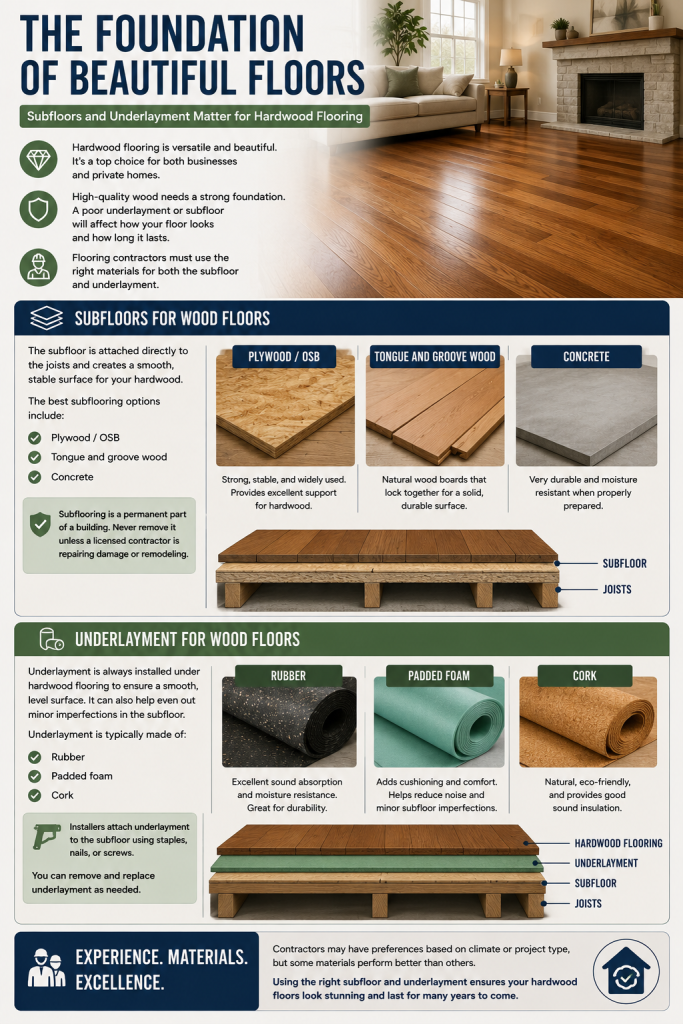 is one z of the most versatile and beautiful options out there for both businesses and private homes. However, even the highest quality of wood is not going to hold up well or look its best if the underlayment or the subfloor is subpar. Flooring contractors must use certain types of material for both the underlayment and the subfloor when it comes to hardwood flooring.
Subfloors for Wood Floors
There are a few different types of subfloors that are proper for a hardwood floor. The subflooring is attached directly to the joists and creates a smooth surface for flooring. The best subflooring for hardwood floors includes plywood/OSB, tongue and groove wood, and concrete. Subflooring is a permanent part of a building and should never be removed unless by a licensed contractor to repair damage or when doing remodeling.
Underlayment for Wood Floors
Flooring installers place underlayment beneath hardwood flooring to create a smooth and level surface. Underlayment can also help correct minor unevenness in the subfloor so the finished flooring sits level.
Manufacturers commonly make hardwood floor underlayment from rubber, padded foam, or cork. Installers attach the underlayment to the subfloor with staples, nails, or screws. They can also remove and replace the underlayment when necessary.

[…] a hard surface floor, they know that the finished product will only be as good as the subfloor. Joists are a critical part of the subfloor and are a big factor in determining how the flooring surface will be supported throughout […]