
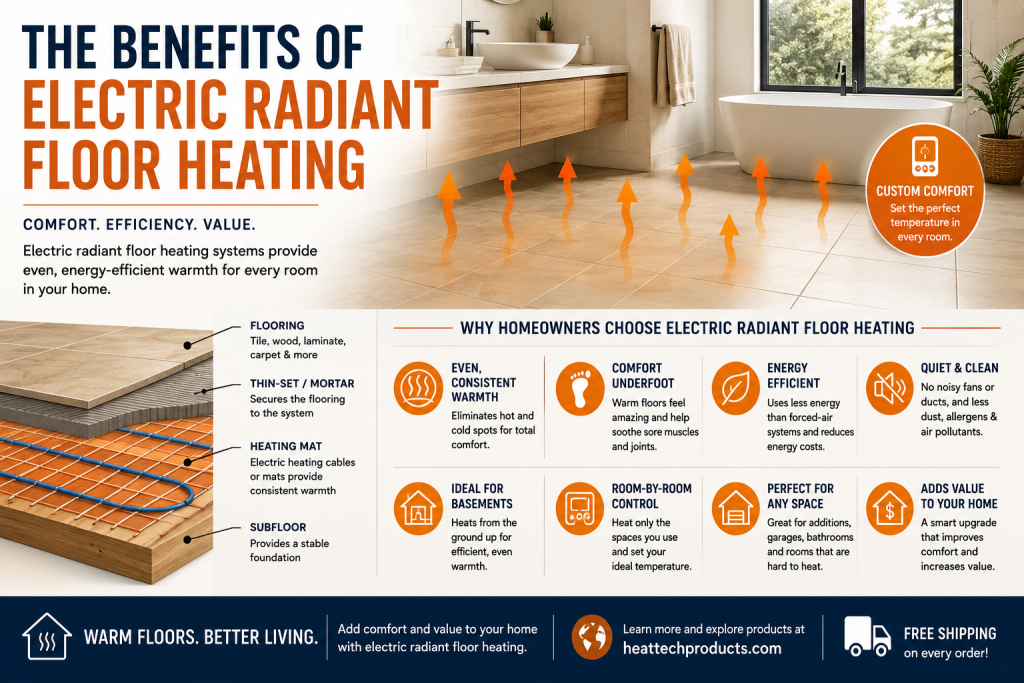
 Electric radiant floor heat is a good addition or alternative to other home heating systems. Made from electric cables or mats built into the floor or attached to the subfloor, radiant floor systems are available for every type of flooring, including hardwood and carpeting. Electric radiant floors are less expensive and easier to install than other types of radiant floor heat. Electric radiant floor heat is energy-efficient and adds comfort and value to a home.
Radiant floor heat offers even heating throughout the home, eliminating hot and cold spots. Tile, laminate, and concrete floors are comfortable on bare feet, and constant warmth soothes aching joints and muscles. A radiant floor system can provide custom thermostats for individual rooms, allowing homeowners to adjust temperatures to their personal preferences. These systems work especially well in bathrooms where extra warmth may improve comfort. They also provide an effective solution for rooms that stay colder than the rest of the home. Because radiant floor heating does not use vents, furniture, rugs, or drapes cannot block the heat, which gives homeowners more flexibility when arranging a room.
Electric radiant floor heat is noiseless, with no sound of a running furnace or blowing air. The lack of air movement also means that indoor air pollutants, dust, and allergens are not blown through the heating system into the rest of the house. This improves air quality and reduces the amount of dust that settles in the home. Because radiant floor heating does not rely on pressurized air moving through ducts, gaps in ductwork or insulation cannot waste warmed air. The system also avoids using energy to power furnace fans that move air through the ductwork.
Since heat rises, electric radiant floor systems heat basements more efficiently than a traditional system using ducts and vents. The heat from a radiant flooring system will naturally distribute warmth throughout a basement room. Warmed air blown through ceiling vents or even radiant heat from wall or ceiling panels will linger at the ceiling, never reaching the floor. Concrete basement floors have a large thermal mass and can absorb radiant electric heat during off-peak hours. They can then continue releasing that stored heat for several hours after the system shuts off.
Electric floor heat is a good choice for home additions, garages, or any application where expanding the ductwork or taxing the existing furnace is impractical. Spaces that are only used part-time will not need to be heated when not in use. Radiant floor systems make it possible to isolate heat to occupied areas of a home, like bedrooms and bathrooms. While not wasting energy heating storage areas and other unused space.
Consider adding electric radiant floor heating when replacing old flooring or building a new addition. The advantages of installing an electric radiant heat flooring system are well worth the investment.
http://www.heattechproducts.


My favorite part of your article was definitely when you talked about how noiseless electric floor heating is. Having a house that’s comfy and very relaxing to live in without any noise has always been a dream of mine, but this is quite hard when we have to warm ourselves up with a furnace all the time. Now that I know a more quiet alternative, I’ll look for any heating system experts that can install some electric floor heating for me.