
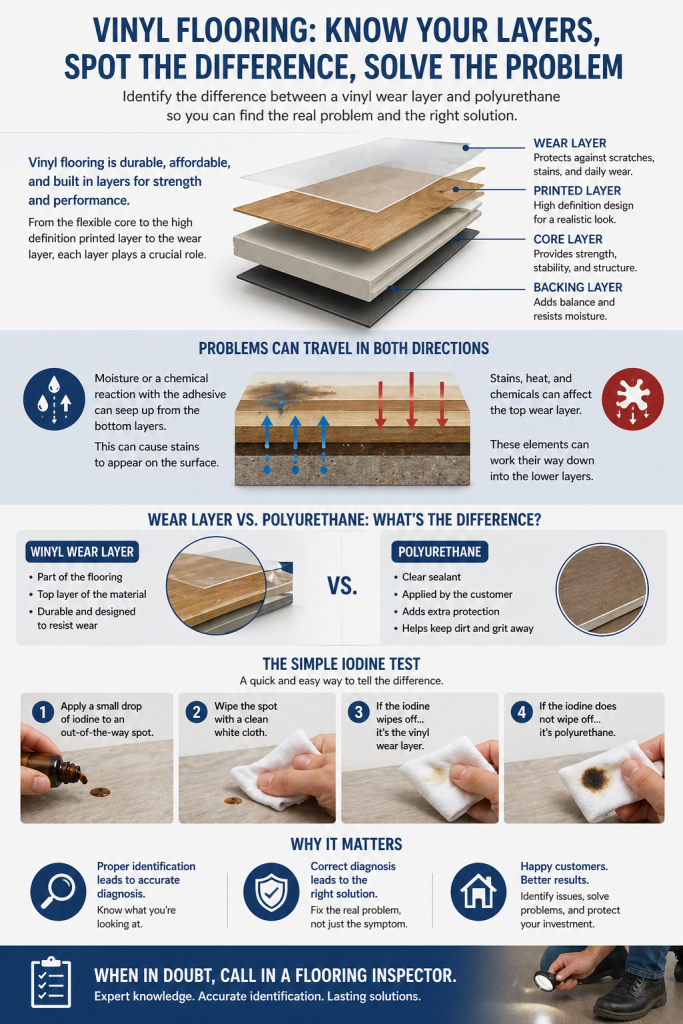
 Wondering about how to test the difference between a vinyl wear layer and polyurethane? Vinyl flooring is among the most durable and affordable options when it comes to floor coverings. Many businesses and residential homes alike are choosing vinyl flooring. One of the reasons why vinyl flooring is so strong and stain-resistant is because it is made of several different layers, from a flexible core to a high definition printed page to the wear layer. A flooring inspector who has been called in to check out a problem with the floor must know how to identify each layer.
Many installation issues can have a permanent effect on the vinyl flooring. Moisture or a chemical reaction with the adhesive can seep up from the bottom layers. This can cause stains to appear on the surface. On the other hand, stains, heat, and chemicals can affect the top wear layer. These elements can then work their way down into the lower layers.
Flooring inspectors need to identify the different layers in vinyl flooring. One of the hardest distinctions is between a vinyl wear layer and polyurethane. The vinyl wear layer sits at the top of the material. Polyurethane is a clear sealant. Customers sometimes apply it to the flooring for added protection. It helps keep dirt and grit away.
When a flooring inspector is trying to identify problems, they need to know what they are looking at. There is a simple test that they can do to determine whether they are seeing the vinyl wear layer or the layer of polyurethane. All the flooring inspector has to do is apply a little bit of iodine to a small out-of-the-way spot. If the iodine wipes off, the layer is the vinyl wear layer. Iodine doesn’t wipe off the polyurethane finish. Once the flooring inspector knows what they are dealing with, they can take the next step and investigate any further problems.
When customers have problems with their vinyl flooring, they should call in a flooring inspector. The flooring inspector must be able to identify issues and figure out what is causing the problems. Identifying the difference between a vinyl wear layer and the polyurethane layer is an easy way to start finding the real problems and coming up with a solution.
Leave a Reply