
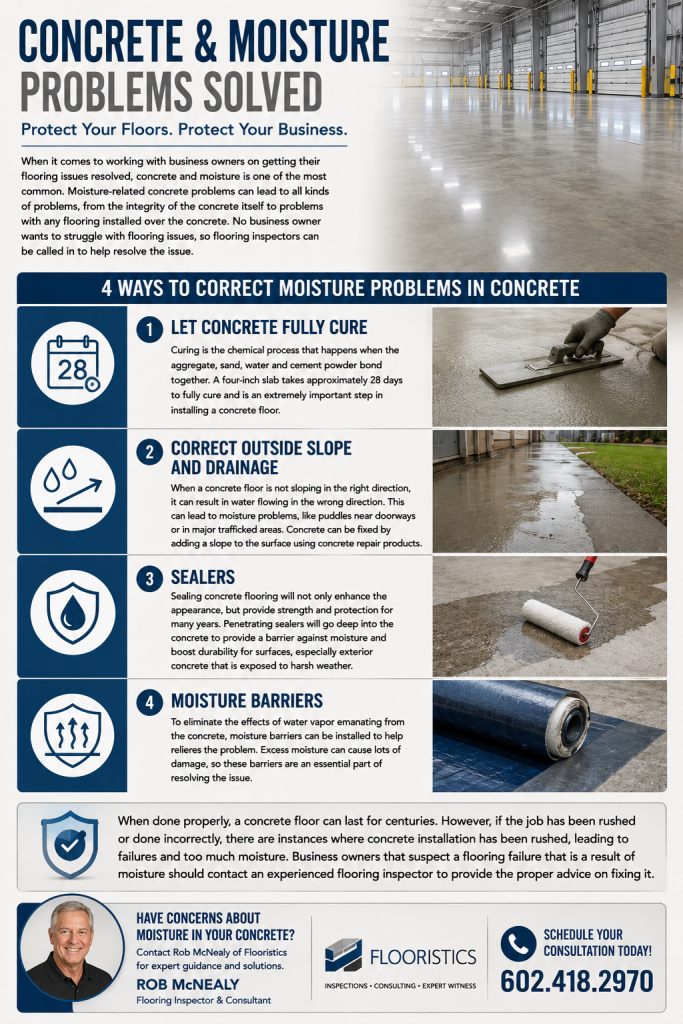
 When it comes to working with business owners on getting their flooring issues resolved, concrete and moisture are two of the most common. Moisture-related concrete problems can lead to all kinds of problems, from the integrity of the concrete itself to problems with any flooring installed over the concrete. No business owner wants to struggle with flooring issues, so flooring inspectors can be called in to help resolve the issue.
Here are 4 ways to correct moisture problems in concrete:
1. Let the concrete fully cure
Curing is the chemical process that happens when the aggregate, sand, water, and cement powder bond together. A four-inch slab takes approximately 28 days to fully cure and is an extremely important step in installing a concrete floor.
2. Correct outside slope and drainage
When a concrete floor is not sloping in the right direction, it can result in water flowing in the wrong direction. This can lead to moisture problems, like puddles near doorways or in major trafficked areas. Concrete can be fixed by adding a slope to the surface using concrete repair products.
3. Sealers
Sealing concrete flooring will not only enhance the appearance but also provide strength and protection for many years. Penetrating sealers will go deep into the concrete to provide a barrier against moisture and boost durability for surfaces, especially exterior concrete that is exposed to harsh weather.
4. Moisture Barriers
To eliminate the effects of water vapor emanating from the concrete, moisture barriers can be installed to help relieve the problem. Excess moisture can cause lots of damage, so these barriers are an essential part of resolving the issue.
When done properly, a concrete floor can last for centuries.
Concrete floors can last for many years when installers complete the job correctly and allow proper curing and preparation. However, rushed installation practices or improper construction methods can lead to flooring failures and excess moisture problems.
Moisture-related concrete issues can damage flooring materials and affect the long-term performance of the floor system. These problems may include adhesive failures, discoloration, warping, buckling, or surface deterioration.
Business owners who suspect that moisture is contributing to a flooring failure should contact an experienced flooring inspector. A qualified inspector can identify the source of the problem and recommend the proper repair or moisture-correction methods.
If you have concerns about correcting moisture problems in concrete, please contact Rob McNealy of Flooristics.


[…] selecting a vapor retarder, there are some important considerations. Most experts recommend a minimum 6 mil construction-grade […]