
Resilient flooring, or vinyl flooring, is made from synthetic materials. It is a durable flooring option.
Vinyl flooring is popular in workspaces. It is affordable, waterproof, and easy to maintain. Its softer surface can also make standing for long periods more comfortable.
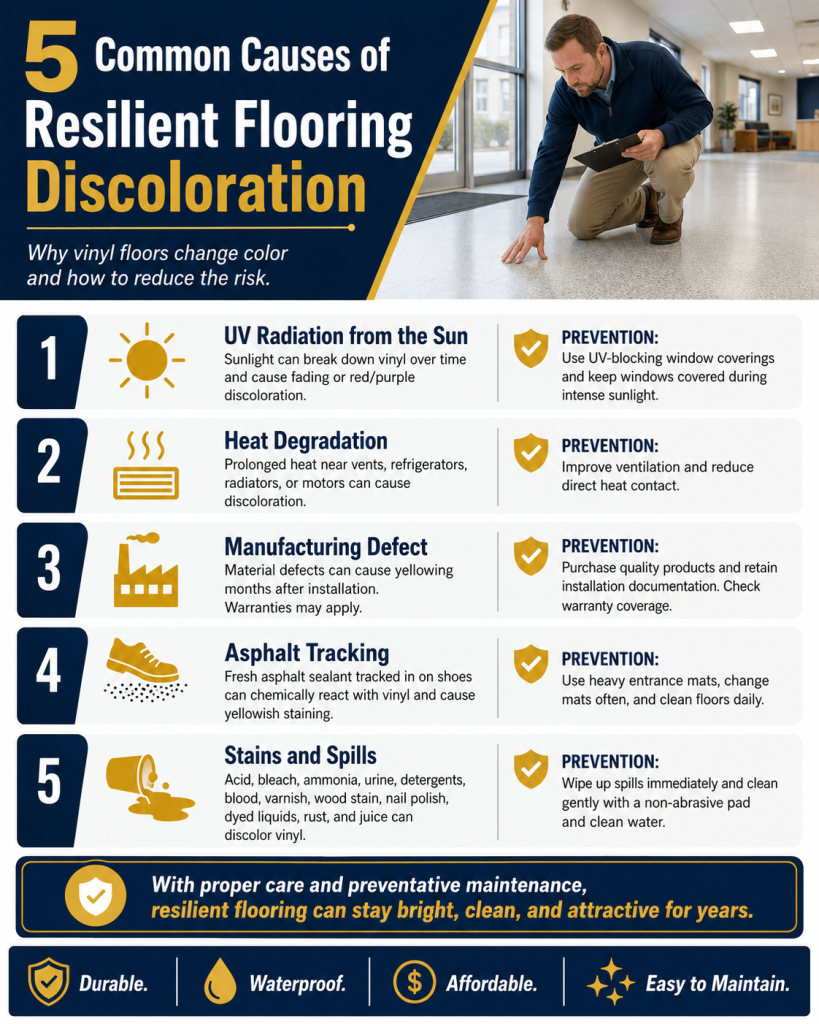
However, vinyl flooring can discolor over time. Lighter colors may show discoloration more easily. Here are 5 common causes of resilient flooring discoloration. These tips can also help reduce the risk.
1. UV Radiation from the Sun
The sun’s UV rays can break down the vinyl flooring over time, causing it to fade. It can create spotted areas of red, purple, or similar colors as the surface of the flooring reacts to the harsh sunlight. To minimize discoloration from the sun, install UV-blocking window coverings and solar screens. Keeping windows covered during times of intense sunlight can also help.
2. Heat Degradation
When resilient flooring is exposed to prolonged heat, it can cause discoloration. It is frequently seen near heating vents or underneath refrigerators, radiators, and other appliances that run a motor and generate heat. The best way to minimize discoloration from heat is to ensure that motors have proper ventilation so they don’t run too hot and minimize the contact between the vinyl flooring and the heat source.
3. Manufacturing Defect
Sometimes due to a manufacturing defect, resilient flooring can begin to yellow a few months after installation. Material defects incorporated during manufacturing can contribute to discoloration, and most installers provide a warranty to cover any issues caused by defects in the product.
4. Asphalt Tracking
Discoloration of vinyl flooring can occur with asphalt tracking, which occurs when people bring in fresh asphalt sealant from outdoors on their shoes, and it chemically reacts with the material in the vinyl flooring, causing yellowish discoloration. While it can happen over time, it often occurs when a parking lot or driveway has been freshly sealed. The best way to prevent this permanent discoloration on vinyl flooring is to place heavy doormats in high-traffic areas, change out the mats frequently, and clean the floor daily to prevent penetration.
5. Stains and Spills
When certain liquids come in contact with resilient flooring, it can lead to discoloration. Acid, bleach, ammonia, urine, harsh detergents, blood, varnish, wood stain, nail polish, dyed liquids, rust, and juice can cause discoloration that is particularly difficult to remove from vinyl flooring. The best way to prevent discoloration is to wipe up the spill immediately, then clean the area with a non-abrasive scrubbing pad, then wipe with clean water.
Resilient flooring is a wise choice to install in the work area for many reasons, and with proper care and preventative maintenance, you can ensure that it stays bright, clean, and newer-looking for many years.
Have you discovered any tips or tricks to keep resilient flooring from discoloring? Please share this article and let us know your thoughts in the comments below.


[…] patch can be used on concrete, wood, masonry, and even in drywall, and it prepares the surface for all kinds of flooring, such as wood, carpet, and more. Floor coverings will always look their best and last longest with […]