Flooristics, LLC

Article Search

Family Owned, Locally Operated
  • Home
  • Blog
    • Videos
    • Podcasts
    • Carpet and Rugs
    • Expert Witness
    • Floor Safety
    • Flooring Help
    • Hardwood and Laminate
    • Podcasts
    • Resilient
    • Tile and Stone
    • Tools
  • About
  • Contact
  • Floor Inspections
  • Expert Witness Services
  • Walkway Audits
    • Walkway Audit Process
    • OSHA “Qualified Person”

5 Typical Manufacturing Defects for Wood Flooring

January 10, 2017 by Flooristics staff Leave a Comment

Share Button

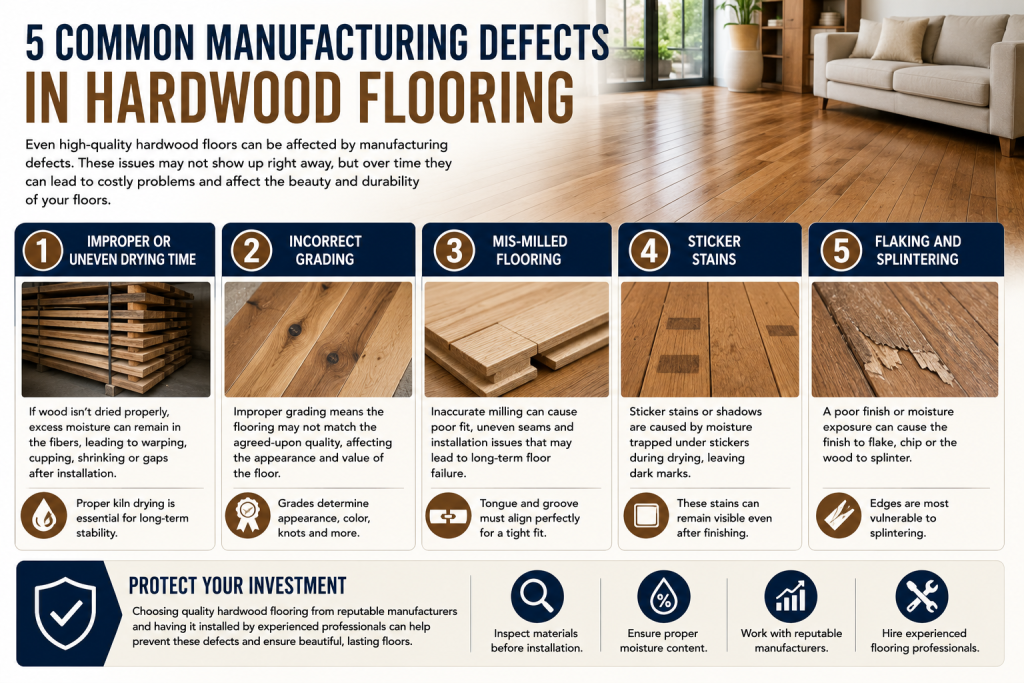
Wood flooring is among the most popular choices for businesses and homeowners alike. The warmth and beauty of natural wood are appealing, but even hardwood floors can suffer from manufacturing defects that can compromise the integrity of the product. When manufacturing defects manifest in wood flooring, weeks, months, or even years after installation, it can become a big problem.

Here are five of the most common manufacturing defects for hardwood floors:

Improper or Uneven Drying Time

One of the most important and critical steps for hardwood flooring material is the kiln drying process. The wood needs to dry so that moisture can be removed from all the fibers. It can often take weeks for green lumber to go through the drying process. If it is not done correctly, there can be issues with the wood flooring down the road.

Incorrect Grading

Lumber grades are national and international standards for certain qualities like color, appearance, size of knots, and more. Sometimes the manufacturer will incorrectly grade flooring material so that the installer and the customer aren’t receiving what they ordered.

Mis-milled Flooring

When wood is milled into flooring, the sizes must be just right, and the tongue and grooves need to line up perfectly. Milling defects can lead to long-term flooring problems for both business owners and homeowners.

Sticker Stains

Sticker stains, also known as sticker shadows, are discolorations that develop in the wood during the drying process. These marks appear in areas where stickers or spacers contact the wood while it dries.

The discoloration often appears as a dark mark in the shape of the sticker. In many cases, the stain becomes even more noticeable after installers apply the finish to the wood flooring.

Flaking and Splintering

Wood flooring may come with a factory-applied finish or receive a finish after installation. Both types of flooring should have a durable protective coating on the surface.

However, problems can still develop over time. In some cases, the finish may begin to flake, peel, or chip away. When this happens, the damaged areas expose the wood underneath to wear, moisture, and additional damage. Splintering occurs when moisture causes the board to swell, and an improperly finished edge is the weakest part and may splinter.

Filed Under: Floor Safety, Flooring Help, Hardwood and Laminate Tagged With: blog

Leave a Reply Cancel reply

Your email address will not be published. Required fields are marked *

Call Today! 1.801.574.0387

  • Email
  • Facebook
  • Pinterest
  • RSS
  • Twitter
  • YouTube

Recent Posts

What is Hydrostatic Pressure?

When working with concrete, hydrostatic pressure plays a big role. But what is it, and why is it so … [Read More...]

Get the Facts: Arizona Slip and Fall Expert Witness

Arizona business owners, customers and employees should be very aware of floor safety, but often a … [Read More...]

Recent Comments

  • How Can Moisture Problems in Concrete be Corrected? - Flooristics, LLC on Certified Floor Inspections
  • What Causes Crowning and Cupping in Wood Floors? - Flooristics, LLC on Certified Floor Inspections
  • What Causes Grout to Break Up? - Flooristics, LLC on Certified Floor Inspections

Contact Us

Flooristics, LLC
P.O. Box 91171
Salt Lake City, UT 84109
801.574.0387

View our Financial Disclosure. and Privacy Policy.
© 2014 Flooristics, LLC. All rights reserved.