
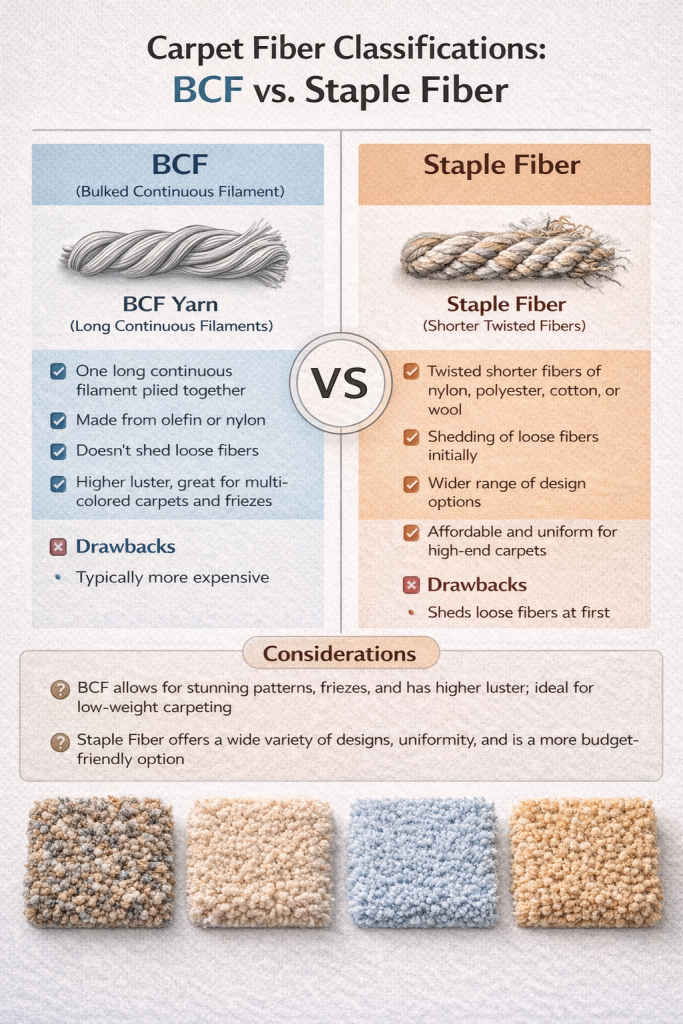
 When it comes to carpet manufacturing, there are two different classifications for the fiber systems: staple yarns and BCF (bulked continuous filament). Each one provides certain advantages and disadvantages, so it’s a good idea for carpet inspectors to share that information with their clients.
BCF
BCF is a fiber system that is one long filament that is plied together. The result is continuous bundles of carpeting fiber that don’t shed loose filaments. Most BCF carpet is made from olefin or nylon, and it has a higher resistance to pulling.
BCF carpeting allows for many beautiful designs and patterns. People choose it for multi-colored carpet options and friezes. It has a higher luster than staple fiber and, for this reason, is the better choice in low-weight carpeting. Also, BCF carpeting is usually more expensive than staple fiber.
Staple Fiber
This fiber system is primarily for nylon, polyester, cotton, and wool. They twist together to form long pieces of yarn that tuft into the carpet backing. Staple fiber has a wider range of design options, from shag and cabled yarns to very small plies. For high-end carpets, staple fiber is the yarn of choice because of its uniformity. Staple fiber is also usually more affordable than BCF, except for the luxury-level carpeting options.
Among the drawbacks of staple yarn is the shedding of loose filaments, usually immediately after installation. The filaments work loose and accumulate on the surface until someone vacuums them up. It is a normal part of the life of the carpet and will stop eventually. It should not affect the performance of the carpet in any way in the long run; sometimes, excessive shedding is due to a manufacturing error.
Each version provides advantages and disadvantages that need evaluation to best meet the specific requirements of carpet selection for each client.
Leave a Reply