
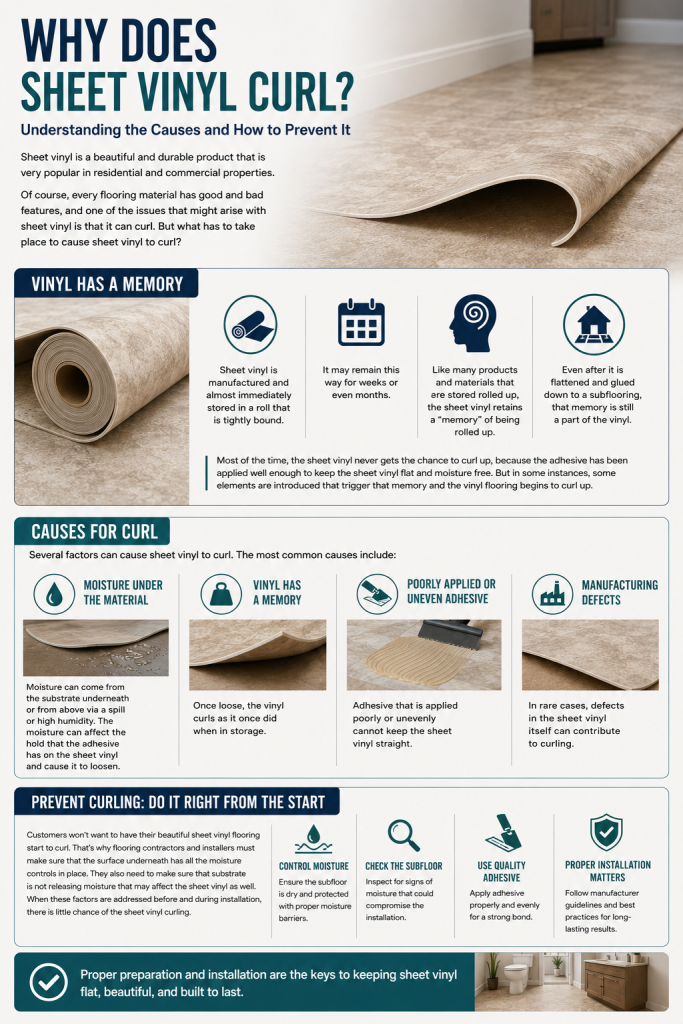
 Sheet vinyl is a beautiful and durable product that is very popular in residential and commercial properties. Of course, every flooring material has good and bad features, and one of the issues that might arise with sheet vinyl is that it can curl. But what has to take place to cause sheet vinyl to curl?
Vinyl Has a Memory
Of course, sheet vinyl is manufactured and almost immediately stored in a roll that is tightly bound. It may remain this way for weeks or even months. Like many products and materials stored in a rolled position, sheet vinyl retains a “memory” of being rolled up. Even after installers flatten the material and glue it to a subfloor, the vinyl still retains that memory.
Causes for Curl
One of the most common factors that causes sheet vinyl to curl is moisture getting underneath the material. The moisture can come from the substrate underneath or from above via a spill or high humidity. The moisture can affect the hold that the adhesive has on the sheet vinyl and cause it to loosen. Once loose, the vinyl curls as it once did when in storage. Other factors include poorly applied or unevenly applied adhesive that cannot keep the sheet vinyl straight.
Customers won’t want to have their beautiful sheet vinyl flooring start to curl. That’s why flooring contractors and installers must make sure that the surface underneath has all the moisture controls in place. They also need to make sure that the substrate is not releasing moisture that may affect the sheet vinyl as well. When these factors are addressed before and during installation, there is little chance of the sheet vinyl curling.

Leave a Reply