
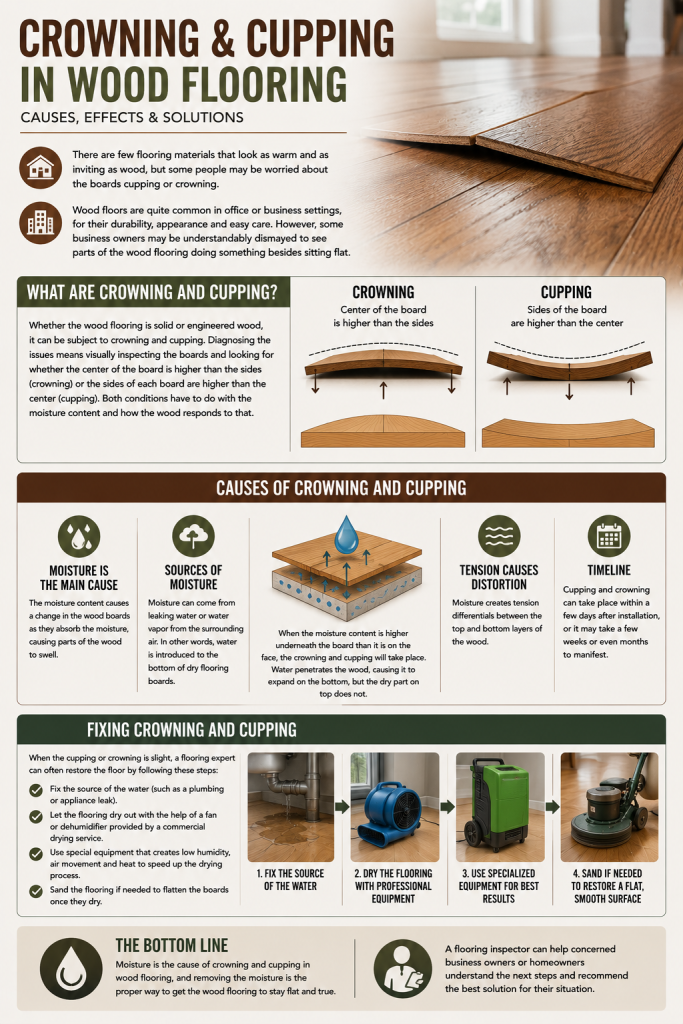
 There are a few flooring materials that look as warm and as inviting as wood, but some people may be worried about the boards cupping or crowning. Wood floors are quite common in office or business settings, for their durability, appearance, and easy care. However, some business owners may be understandably dismayed to see parts of the wood flooring doing something besides sitting flat.
What are Crowning and Cupping?
Whether the wood flooring is solid or engineered wood, it can be subject to crowning and cupping. Diagnosing the issues means visually inspecting the boards and looking for whether the center of the board is higher than the sides (crowning) or the sides of each board are higher than the center (cupping). Both conditions have to do with the moisture content and how the wood responds to that.
Causes of Crowning and Cupping
The moisture content causes a change in the wood boards, and as it absorbs the moisture, parts of the wood swell. Moisture can come from leaking water or water vapor from the surrounding air. In other words, water is introduced to the bottom of dry flooring boards.
When the moisture content is higher underneath the board than it is on the face, the crowning and cupping will take place. Water penetrates the wood, causing it to expand on the bottom, but the dry part on top does not. Moisture creates tension differentials between the top and bottom layers of the wood. Cupping and crowning can take place within a few days after installation, or it may take a few weeks or even months to manifest.
Fixing Crowning and Cupping
When cupping or crowning is minor, flooring experts usually begin by identifying and correcting the source of the moisture. Common moisture sources include plumbing leaks, appliance leaks, or excess humidity in the environment.
After stopping the moisture intrusion, the flooring must dry thoroughly. Flooring professionals often use fans, dehumidifiers, and commercial drying equipment to speed up the drying process. Specialized equipment can create low-humidity conditions, increase airflow, and apply controlled heat to help remove moisture from the wood.
In some situations, the flooring boards may return to their original shape after they dry completely. If the boards remain uneven, flooring professionals may need to sand and refinish the surface to restore a flat appearance.
Moisture is the primary cause of crowning and cupping in wood flooring. Removing the moisture source and restoring proper environmental conditions gives the flooring the best chance to remain flat, stable, and durable over time.
A flooring inspector can assist concerned business owners or homeowners with the next step in fixing these issues.

[…] Installing a wood floor is not something to be left to amateurs or inexperienced DIY homeowners. To get a long-lasting wood floor, the installation must be done correctly. The floor should also look good and perform up to industry standards. An experienced installer should handle the job. One of the rookie mistakes when installing a wood floor is getting the wood pieces off the rack. […]