
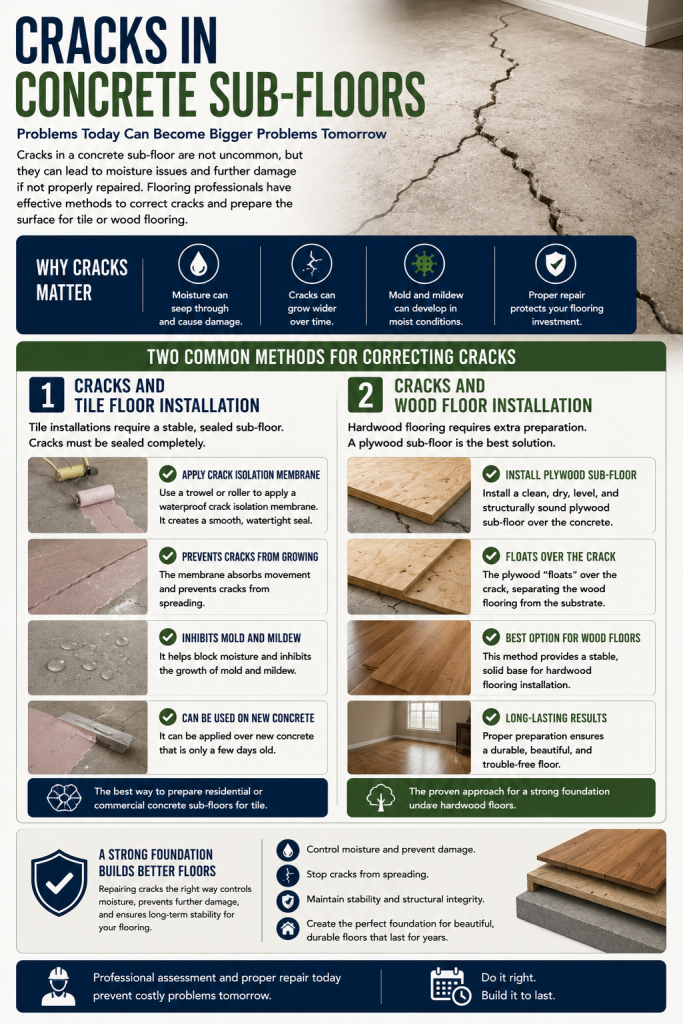
 While it is not desirable, it is not uncommon for cracks to form in a concrete subfloor. It’s the responsibility of a flooring contractor to make sure that the cracks don’t allow excess moisture to affect the flooring and cause the crack to grow. A flooring inspector or floor repair contractor has several different options to use in repairing before putting flooring material like tile or wood down.
Cracks and Tile Floor Installation
Preparing the subfloor for tile means that any cracks in the concrete need to be sealed completely. Most experts recommend applying a waterproof crack isolation membrane to the cracks. The substance can be applied with a trowel or roller and forms a smooth and watertight seal. It also prevents the cracks from growing. It inhibits any mold and mildew growth and can be used over new concrete that is only a few days old. It’s the best way to prepare residential or commercial concrete sub-floors for tile.
Cracks and Wood Floor Installation
Preparing a cracked concrete sub-floor for a hardwood floor installation requires more preparation than for tile. The best method to deal with cracks is to put down a plywood sub-floor that is clean, dry, level, and structurally sound. The plywood sub-floor floats over the crack, separating the wood flooring from the substrate. In this case, it’s the best option for wood floor installation.
Experienced wood flooring installers know that having a strong and proper concrete sub-floor is the key to a durable and trouble-free top floor. Repairing cracks properly is the best way to control moisture, stop cracks from spreading, and maintain stability. The result is a fine foundation on which to install beautiful, durable hardwood flooring that will last for many years.

Leave a Reply