Flooristics, LLC

Article Search

Family Owned, Locally Operated
  • Home
  • Blog
    • Videos
    • Podcasts
    • Carpet and Rugs
    • Expert Witness
    • Floor Safety
    • Flooring Help
    • Hardwood and Laminate
    • Podcasts
    • Resilient
    • Tile and Stone
    • Tools
  • About
  • Contact
  • Floor Inspections
  • Expert Witness Services
  • Walkway Audits
    • Walkway Audit Process
    • OSHA “Qualified Person”

How to Cut Seams on Looped Carpet Installation

September 8, 2017 by Flooristics staff 3 Comments

Share Button

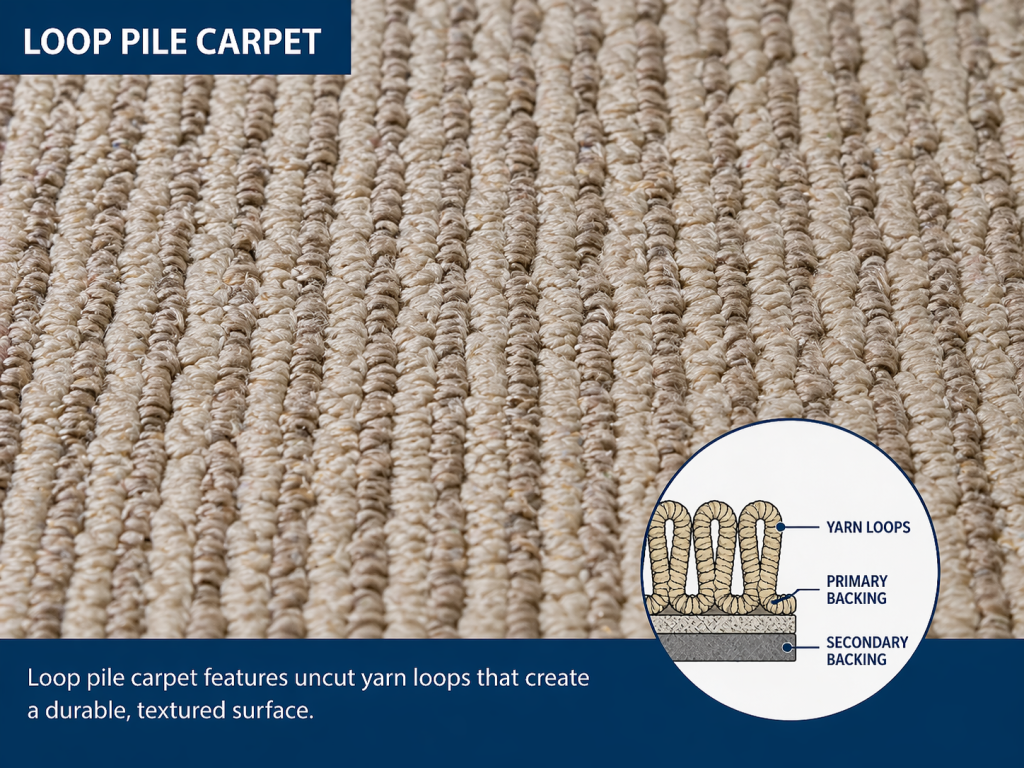
When contractors help their clients choose a loop pile carpet, they have a range of beautiful and durable options that will work for both commercial and residential locations. However, they decided on a looped carpet; it’s helpful for clients to understand what exactly a looped carpet is.

Manufacturers do not shear loop pile carpets like cut pile carpets. Instead of cutting the yarn after weaving it into the backing, manufacturers leave the fibers as loops.  Loop pile carpet comes in many different thicknesses and weights.  The best part about loop pile carpet is that there are plenty of patterns and textures to choose from. Loop pile carpet works very well in high traffic areas like offices, family rooms, game rooms, and clinics.

When installing loop carpet, you must cut seams correctly. To seam two pieces of Berber carpet together, installers need to use a carpeting strip cutter to do it right.  Using a straight edge, the installer presses down and runs the edge of the cutter along it through the carpeting. Installers must cut loop pile carpets from the top, between rows of loops.  If the cut line does not run between two rows of looped pile, it can make the seams look rough, and they won’t match up properly. This makes the seam more visible, and clients will not be pleased.


Filed Under: Carpet and Rugs Tagged With: cut seams, cutting seams on looped carpet, installing looped carpet, looped carpet installation, seams on looped carpet

Comments

  1. Clement says

    June 5, 2022 at 8:42 pm

    Your explanation is quite clear bbut locations a row in loop carpet is quite difficult considering the one that has felt backing or foam.pls advice on the way Forward.

    Reply

Trackbacks

  1. Why are Staple Fibers Blended? - Flooristics, LLC says:
    April 16, 2026 at 2:43 pm

    […] carpets have staple fibers blended. When it comes to strength and beauty in carpeting, there are many fibers to choose from. However, there is no single fiber that is ideal for every use and location. Of […]

    Reply
  2. How Does an Inspector Check for Fuzzing? - Flooristics, LLC says:
    April 17, 2026 at 12:18 pm

    […] the inspector follows specific steps to make that determination. Fuzzing is described as when fibers slip out of the yarn, resulting in a hairy appearance on the carpet surface. In carpeting, several factors can cause it, […]

    Reply

Leave a Reply Cancel reply

Your email address will not be published. Required fields are marked *

Call Today! 1.801.574.0387

  • Email
  • Facebook
  • Pinterest
  • RSS
  • Twitter
  • YouTube

Recent Posts

Gutster Demo Bar

Gutster on DIY’s Cool Tools Demonstrated by Rob McNealy

I demonstrated the Gutster Demo-Bar on Cool Tools, a show on the DIY Network.   I heard about the … [Read More...]

What Causes Shrinking in Resilient Flooring?

Hardwood flooring is probably best known for shrinking and expanding, but resilient flooring can … [Read More...]

Recent Comments

  • Floating Wood Floors Over Existing Floors - Flooristics, LLC on Solid Wood Can Be Installed On What Grade Levels?
  • What Might Cause Discoloration in Lower Levels of Vinyl Flooring? - Flooristics, LLC on How To Install a Sheet Vinyl Over an Existing Floor
  • What Causes Poor Performance in a Hard Surface Floor? - Flooristics, LLC on What Surface Is More Resistant to Scuffing?

Contact Us

Flooristics, LLC
P.O. Box 91171
Salt Lake City, UT 84109
801.574.0387

View our Financial Disclosure. and Privacy Policy.
© 2014 Flooristics, LLC. All rights reserved.