
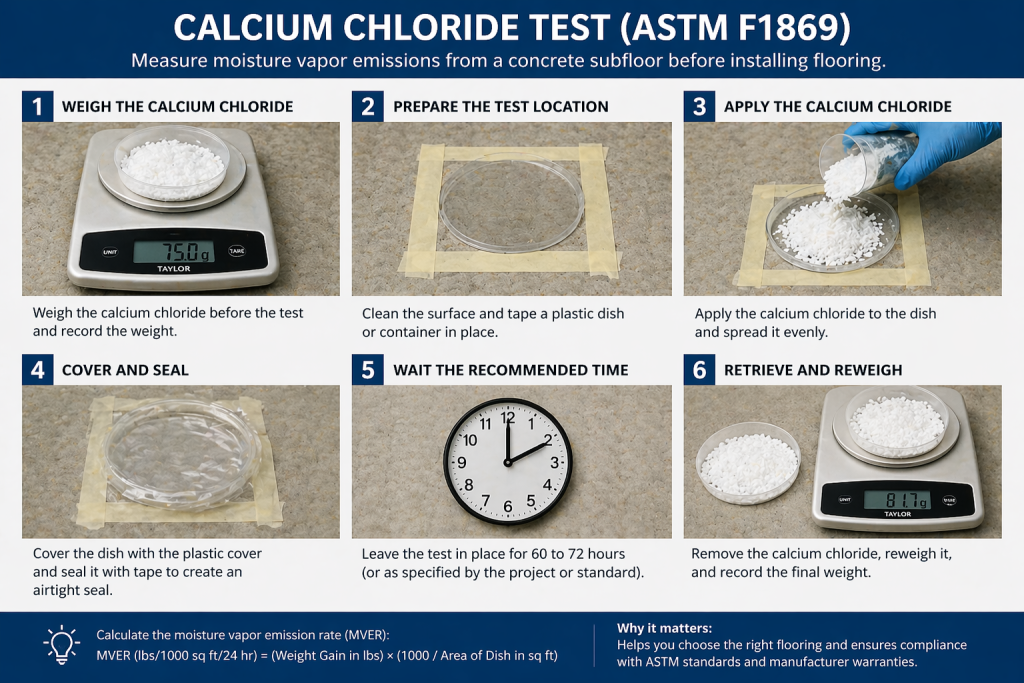
 Before installing new carpet, contractors need to know the levels of moisture in the subfloor. This allows them to pick out the appropriate type of material that will work best. To know what kind of moisture is present in the subfloor, contractors can perform a calcium chloride test.
Moisture can cause plenty of problems in a home or business with a range of flooring choices, from carpet to hardwood to vinyl. Excessive moisture can trigger compatibility problems with flooring, warped materials, and the growth of mildew and mold.
Performing a calcium chloride test (known as the ACC test for anhydrous calcium chloride) is a reliable way to test the water vapor emissions from the subfloor. The contractor weighs the calcium chloride before the test. They must then apply the highly absorbent substance to the surface of the floor after preparing the test locations.
After the right amount of time, the contractor gathers the calcium chloride and weighs it again. Because the substance absorbs water vapor that is coming from the sub-floor, the weight change allows contractors to figure out the amount of moisture released from the floor. This test measures surface emissions only and cannot indicate what kind of moisture is within the subfloor.
The calcium chloride test is not complicated or time-consuming. It should never be skipped when trying to figure out which is the best type of flooring to use. The most important reason is that sub-floor moisture testing is mandatory for a job to comply with ASTM regulations. Also, many manufacturing companies require this type of test to honor the flooring warranty. Contractors who don’t do the moisture test are asking for trouble for themselves and their clients.
[…] result is a strong and durable flooring surface that is warm and inviting. It’s ideal for both residential floors and commercial spaces. However, the best glue-down carpet installations all depend on the condition of the concrete […]