Flooristics, LLC

Article Search

Family Owned, Locally Operated
  • Home
  • Blog
    • Videos
    • Podcasts
    • Carpet and Rugs
    • Expert Witness
    • Floor Safety
    • Flooring Help
    • Hardwood and Laminate
    • Podcasts
    • Resilient
    • Tile and Stone
    • Tools
  • About
  • Contact
  • Floor Inspections
  • Expert Witness Services
  • Walkway Audits
    • Walkway Audit Process
    • OSHA “Qualified Person”

What Does Ultra-dynamic Pressure Do To Floors?

January 13, 2017 by Flooristics staff Leave a Comment

Share Button

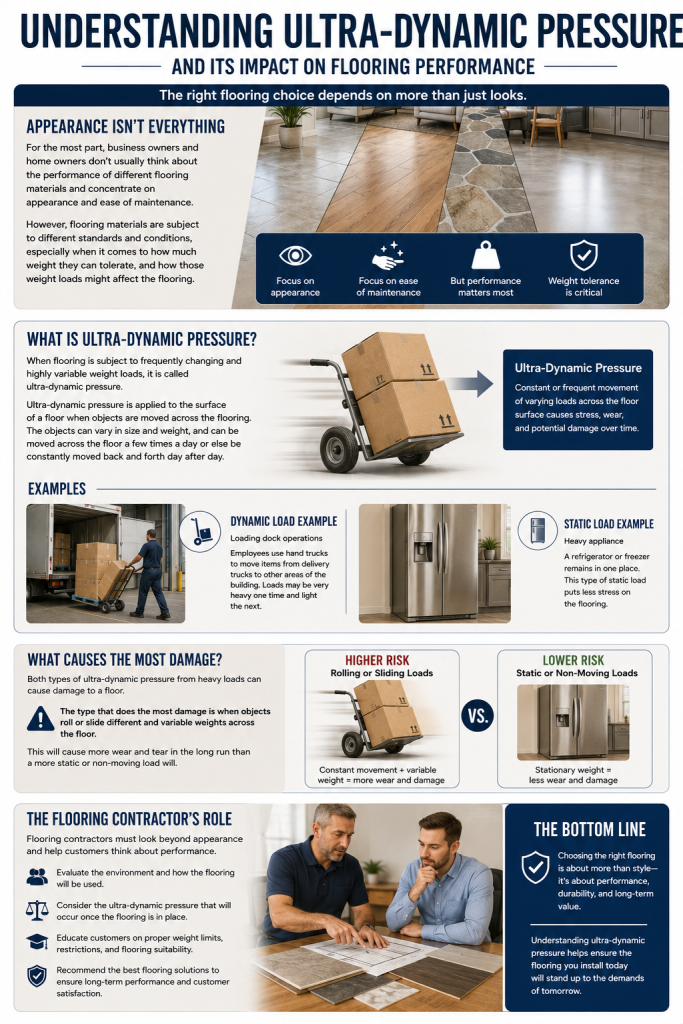
pressure Most business owners and homeowners focus on the appearance of flooring materials. They also pay close attention to ease of cleaning and maintenance. However, many people do not think about how different flooring materials will perform under daily use and stress over time. However, flooring materials are subject to different standards and conditions, especially when it comes to how much weight they can tolerate, and how those weight loads might affect the flooring.

Experts refer to frequently changing and highly variable weight loads on flooring as ultra-dynamic pressure. Moving objects across a floor creates ultra-dynamic pressure on the flooring surface.

The objects can vary greatly in size and weight. Some may move across the floor only a few times each day. Others may move back and forth constantly throughout the day. Repeated movement can place significant stress on the flooring surface over time.

A loading dock is one example of an area exposed to ultra-dynamic pressure. Employees often use hand trucks and carts to move items from delivery trucks into other parts of the building. Some loads may be light, while others may be extremely heavy.

Sometimes the loads might be very heavy, while other times they are light. Another example of a more static load is a heavy appliance that doesn’t move, like a refrigerator or freezer.

Both types of ultra-dynamic pressure from heavy loads can cause damage to a floor, but the type that does the most damage is the one that rolls or slides different and variable weights across the floor. This will cause more wear and tear in the long run than a more static or non-moving load will.

Flooring contractors who have to make decisions about how to advise customers about the best type of flooring for their home or business should definitely take into account the ultra-dynamic pressure that will be taking place once the flooring is in place. In order to keep customers happy and ensure that the flooring material will perform up to standards, flooring contractors need to educate them on proper weight, restrictions, and more.
 

Filed Under: Expert Witness, Floor Safety, Flooring Help Tagged With: concrete, concrete pressure, dynamic pressure, floor damage, floor weight, ultra dynamic pressure, weight loads

Leave a Reply Cancel reply

Your email address will not be published. Required fields are marked *

Call Today! 1.801.574.0387

  • Email
  • Facebook
  • Pinterest
  • RSS
  • Twitter
  • YouTube

Recent Posts

Alabama Slip and Fall Expert Witness Delivers Unbiased Info

When it comes to Alabama slip and fall accidents and injuries, Rob McNealy of Flooristics is the … [Read More...]

Scratched Hardwood Repair Looks Dull

Dear Rob: I touched up a scratch on my red oak hardwood floor using the same finish that the floor … [Read More...]

Recent Comments

  • Common Flooring Mistakes By Maintenance Workers - Flooristics, LLC on Certified Floor Inspections
  • How Can Moisture Problems in Concrete be Corrected? - Flooristics, LLC on Certified Floor Inspections
  • What Causes Crowning and Cupping in Wood Floors? - Flooristics, LLC on Certified Floor Inspections

Contact Us

Flooristics, LLC
P.O. Box 91171
Salt Lake City, UT 84109
801.574.0387

View our Financial Disclosure. and Privacy Policy.
© 2014 Flooristics, LLC. All rights reserved.