Flooristics, LLC

Article Search

Family Owned, Locally Operated
  • Home
  • Blog
    • Videos
    • Podcasts
    • Carpet and Rugs
    • Expert Witness
    • Floor Safety
    • Flooring Help
    • Hardwood and Laminate
    • Podcasts
    • Resilient
    • Tile and Stone
    • Tools
  • About
  • Contact
  • Floor Inspections
  • Expert Witness Services
  • Walkway Audits
    • Walkway Audit Process
    • OSHA “Qualified Person”

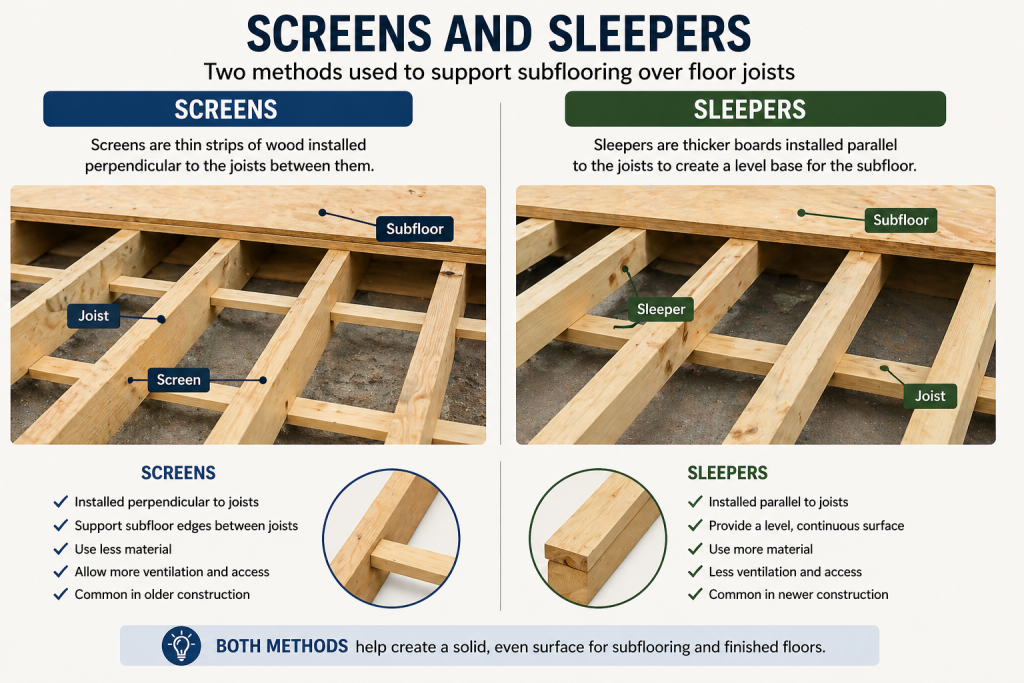
Defining Screeds and Sleepers

July 12, 2017 by Flooristics staff 4 Comments

Share Button

When installing hardwood flooring, you need to know all the terminology used in this specialized process. Some of the more unusual terms to know are screeds and sleepers. As installers, inspectors, and customers start to speak the same language when it comes to wood flooring, there will be fewer communication errors and a better understanding of the process.

Screeds and sleepers are different names for the same thing–2 x 4-inch boards that are kiln-dried and flat. They come in random lengths and attach to a concrete floor. They serve as the nailing base for the top layer of hardwood flooring and provide an extra layer between the finished flooring surface and the concrete.

Screeds and sleepers range in length from 18 inches to 48 inches. Installers should dry them well, usually in a kiln. Installers set them on the subfloor on the flat face. They place them at right angles to the direction of the finished floor. Installers must stagger the joints for screeds or sleepers. They should also leave space between the edges. Around the ends of the room, installers should set screeds continuously. Most of the time, installers place a moisture barrier between the sleepers and the finished flooring material.

With screeds and sleepers, flooring installers have the best way to attach the tongue-and-groove strip flooring to the subfloor and protect it from moisture. The result is a long-lasting flooring surface. It can withstand heavy use and abuse from above or below. It also holds up against wear and tear and moisture. Installers can use screeds and sleepers properly to achieve this performance. This approach helps them deliver high-quality hardwood flooring to their clients.

Filed Under: Floor Safety, Hardwood and Laminate Tagged With: flooring installation, hardwood floor installation, hardwood floors, screeds, screeds in flooring, sleepers, sleepers in flooring

Comments

  1. Shammy Peterson says

    February 11, 2022 at 6:49 pm

    The best part of your blog for me is when you said that sleepers and screeds could protect the subfloor from moisture problems and ensure that they can withstand all kinds of use. My father will surely find this tip helpful as he is interested in having concrete retaining walls installed to beautify her lawn and protect her property from flooding issues. I will be sure to ask him to consider your tips as he prefers cost-effective solutions.

    Reply
    • admin says

      November 22, 2024 at 11:33 am

      I am glad to help.

      Reply
  2. Constance Flores says

    December 30, 2022 at 10:34 am

    Floor sleepers are used to support sub flooring. Screed is the top layer of cement. The two words (sleepers and screed) are not supposed to be used interchangeably. Please update this post.

    Sincerely,

    Reply
    • admin says

      November 22, 2024 at 11:06 am

      Thanks for pointing that out.

      Reply

Leave a Reply Cancel reply

Your email address will not be published. Required fields are marked *

Call Today! 1.801.574.0387

  • Email
  • Facebook
  • Pinterest
  • RSS
  • Twitter
  • YouTube

Recent Posts

Who Needs a Connecticut Flooring Defects Expert Witness?

When flooring material at the workplace is identified as defective, it can be a problem for … [Read More...]

How To Install a Sheet Vinyl Over an Existing Floor

Putting one type of flooring material over another is pretty common, because most flooring can … [Read More...]

Recent Comments

  • Floating Wood Floors Over Existing Floors - Flooristics, LLC on Solid Wood Can Be Installed On What Grade Levels?
  • What Might Cause Discoloration in Lower Levels of Vinyl Flooring? - Flooristics, LLC on How To Install a Sheet Vinyl Over an Existing Floor
  • What Causes Poor Performance in a Hard Surface Floor? - Flooristics, LLC on What Surface Is More Resistant to Scuffing?

Contact Us

Flooristics, LLC
P.O. Box 91171
Salt Lake City, UT 84109
801.574.0387

View our Financial Disclosure. and Privacy Policy.
© 2014 Flooristics, LLC. All rights reserved.