Flooristics, LLC

Article Search

Family Owned, Locally Operated
  • Home
  • Blog
    • Videos
    • Podcasts
    • Carpet and Rugs
    • Expert Witness
    • Floor Safety
    • Flooring Help
    • Hardwood and Laminate
    • Podcasts
    • Resilient
    • Tile and Stone
    • Tools
  • About
  • Contact
  • Floor Inspections
  • Expert Witness Services
  • Walkway Audits
    • Walkway Audit Process
    • OSHA “Qualified Person”

How To Check Tuft Bind in the Field

August 29, 2017 by Flooristics staff 1 Comment

Share Button

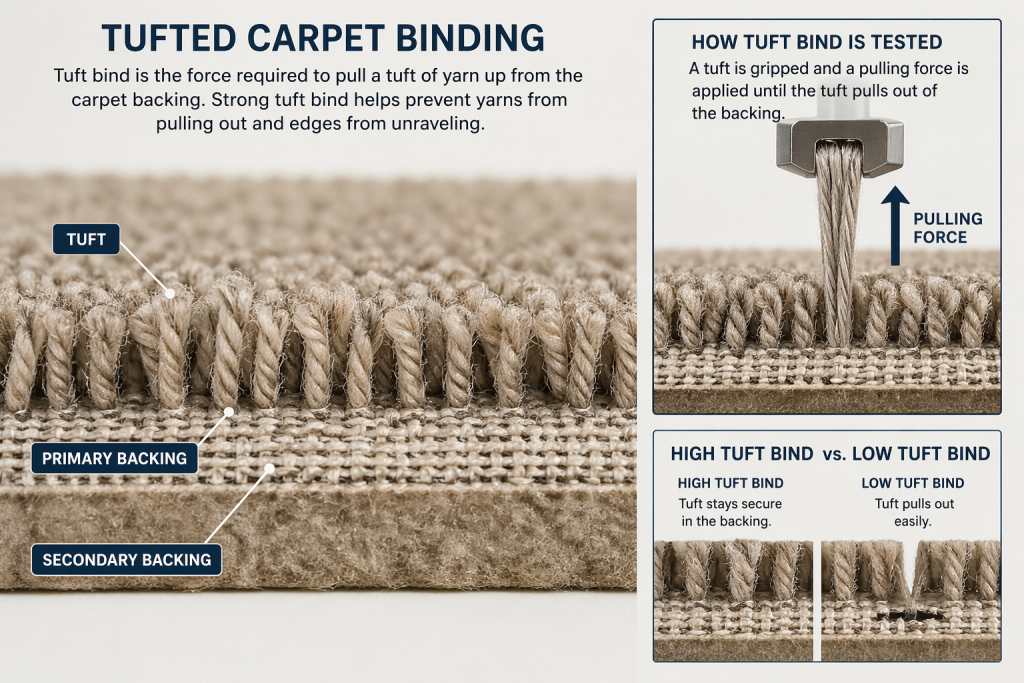
When a flooring inspector is in the field examining carpeting, they may perform tests. One of those tests involves measuring the tuft bind. Tuft bind is the force required to pull out a yarn from the backing of a piece of carpet. A higher tuft bind means the carpet backing holds the yarn tightly. A lower one means that it won’t take as much force to pull a piece away from the backing.

In the field, a flooring inspector can measure it by attaching a tuft to the force gauge using a clamp or hemostat. They will then slowly pull the tuft until the bond breaks. The pull is usually around 12 inches per minute. The flooring inspector should pull at least five samples from different areas of the carpet to get a range of measurements. They will record the ranges and averages to arrive at an accurate tuft binding.
Filed Under: Carpet and Rugs

Trackbacks

  1. How to Back Up Factual Statements in an Inspection Report - Flooristics, LLC says:
    April 20, 2026 at 1:28 pm

    […] inspectors have a lot of things they need to accomplish whenever they visit a job site. Besides being an expert in all kinds of flooring, they need to be able to assess a problem and […]

    Reply

Leave a Reply Cancel reply

Your email address will not be published. Required fields are marked *

Call Today! 1.801.574.0387

  • Email
  • Facebook
  • Pinterest
  • RSS
  • Twitter
  • YouTube

Recent Posts

Pierre Flooring Defects Expert Witnesses Can Help

From stone, tile and laminate to carpet, hardwood and resilient, flooring material is a key part of … [Read More...]

Performing the ASTM F-2170-11 Test

The ASTM F-2170 standard is important for measuring moisture, or relative humidity, in concrete. … [Read More...]

Recent Comments

  • Floating Wood Floors Over Existing Floors - Flooristics, LLC on Solid Wood Can Be Installed On What Grade Levels?
  • What Might Cause Discoloration in Lower Levels of Vinyl Flooring? - Flooristics, LLC on How To Install a Sheet Vinyl Over an Existing Floor
  • What Causes Poor Performance in a Hard Surface Floor? - Flooristics, LLC on What Surface Is More Resistant to Scuffing?

Contact Us

Flooristics, LLC
P.O. Box 91171
Salt Lake City, UT 84109
801.574.0387

View our Financial Disclosure. and Privacy Policy.
© 2014 Flooristics, LLC. All rights reserved.